
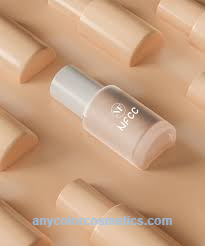
A new foundation shade or formula begins as a sketch on a product brief, a collection of desired attributes that include coverage level, finish type, skin compatibility, and packaging preference. This document travels through several distinct phases before arriving as a finished product on a retail shelf: raw material sourcing, laboratory compounding, stability testing, shade matching, packaging selection, and finally, production scale-up. Each phase carries its own timeline and potential for iteration, because a formula that performs well in a beaker may fail in a compact, and a shade that matches a digital swatch may appear different under store lighting. Anycolorcosmetics, operating under the NiFei brand as a color cosmetics manufacturer, approaches Foundation OEM&ODM with structured project management that transforms the abstract brief into tangible inventory, recognising that the duration of this transformation varies with formula complexity, packaging requirements, and regulatory destinations. How does a manufacturing partner estimate and manage the development cycle so that a brand's launch calendar remains realistic and achievable?
The formulation phase constitutes the initial and often most variable segment of the timeline, because creating a stable emulsion that spreads evenly, adheres to skin, and resists oxidation requires both scientific expertise and experimental iteration. Anycolorcosmetics maintains a dedicated R&D laboratory where its chemists receive the product brief and begin with a prototype formula drawn from an extensive library of base systems, adjusting pigment concentrations, oil-to-water ratios, and film-forming polymers to match the requested coverage and wear characteristics. This stage typically involves multiple bench trials, because each adjustment to achieve a specific skin feel or finish requires validation for viscosity, pH, and initial appearance. The laboratory provides the client with sample sets for evaluation, receiving feedback that may request a shift in coverage from medium to full, or a transition from dewy to matte, each requiring additional formulation rounds. This iterative dialogue, while essential for achieving the desired product, directly extends the development timeline, and Anycolorcosmetics facilitates this process through rapid sample preparation and responsive communication, compressing what might otherwise be prolonged intervals.
Once the formula achieves initial approval, the stability testing phase commences, because a foundation that separates, discolours, or spoils after three months in a warehouse cannot enter the market regardless of its initial performance. This testing involves placing the formula in controlled environments that simulate various storage conditions: elevated temperature, freeze-thaw cycles, humidity exposure, and light exposure, all according to established cosmetic stability protocols. The duration of this phase depends on the intended shelf life and the distribution regions, because a product destined for tropical climates requires extended thermal testing. Anycolorcosmetics accelerates this phase where possible by conducting concurrent testing, meaning that stability samples enter the oven or refrigerator while shade matching or packaging selection proceeds in parallel, rather than sequentially. This parallel workflow reduces the total calendar time, because the brand does not wait for stability results to begin selecting bottles or compacts, although the final formula cannot be committed to production without completed stability data.
Shade matching, a critical step for foundation products, introduces its own timeline, because achieving precise colour across large batches requires instrument-based colour measurement and visual assessment under multiple light sources. Anycolorcosmetics uses spectrophotometric analysis that compares the prototype against the target reference, generating a colour difference value that guides pigment adjustments. The company maintains a master batch of standardised pigment dispersions that reduce batch-to-batch variation, shortening the shade refinement process. For custom shades or those requiring specific undertones, the colorist may produce several variants, each sent to the brand for evaluation on different skin tones and in different lighting environments. This evaluation loop, while necessary for consumer satisfaction, may extend the cycle by a few weeks, yet Anycolorcosmetics provides digital shade visualisation tools that reduce the number of physical rounds by offering the client a simulated preview before production.
Packaging selection and compatibility testing also contribute to the overall duration, because the formula must interact safely with the chosen container, whether a glass bottle with a pump, a plastic tube, or a compact with a sponge. The packaging receives accelerated aging testing alongside the formula, verifying that the preservative system remains effective and that no leaching or migration occurs between the product and the package components. Anycolorcosmetics maintains a library of standard packaging options that have already passed compatibility tests with its base formulas, allowing clients who select these options to bypass a portion of the testing timeline. For custom packaging, the company provides a timeline estimate that includes mold development, sample production, and filling trials, phases that add weeks but offer the brand a distinctive presentation on the shelf.
The scale-up phase, where the formula transitions from laboratory beakers to industrial mixing vessels and filling lines, represents the final step before mass production. This stage introduces variables not present at small scale, such as heat distribution in large mixers, pumping shear forces, and filling nozzle calibration, each potentially altering the final product's viscosity or colour. Anycolorcosmetics performs pilot batches that replicate the production process at an intermediate scale, identifying any adjustments needed before committing to full-scale runs. This pilot step, while adding time to the cycle, prevents costly rework or re-formulation after commercial batches have been produced. The company also conducts the initial production run with its quality assurance team present, verifying that every parameter from mixing time to filling speed matches the specifications established during development. This hands-on oversight ensures that the foundation reaching the brand matches the samples approved months earlier.
Regulatory documentation and compliance clearance run parallel to the development activities, because each market requires specific dossiers that include formulation disclosure, safety assessments, and claims substantiation. Anycolorcosmetics prepares these documents during the testing phases, collecting the raw data necessary for filing with authorities in the United States, Europe, or other regions. This preparatory work means that when the formula and packaging finalise, the regulatory package stands ready for submission, reducing the interval between production readiness and market entry. For brands targeting multiple countries, the company provides guidance on regional variations in ingredient restrictions and labelling requirements, preventing delays from non-compliant submissions.
The entire Foundation OEM&ODM cycle, from initial conversation to the first pallet of finished goods, spans a duration that respects both the science of cosmetics and the urgency of commercial calendars. https://www.anycolorcosmetics.com/product/foundation-concealer/matte-full-coverage-foundation.html illustrates the type of product that emerges from this structured process, a matte, full-coverage foundation that meets its specifications batch after batch. For a brand considering a foundation launch, the essential question does not concern only the final shade or the packaging aesthetic; it concerns the predictability of the journey from concept to consumer. Does your brand's planning horizon accommodate the necessary phases of formulation, testing, and scale-up, or does your schedule reflect

 English
 Arabic
 French
 Spanish
 Portuguese
 Turkish
 Dutch
Dutch
 Italiano
 Russian
 Romaian
 Portuguese (Brazil)
 Tiếng Việt