
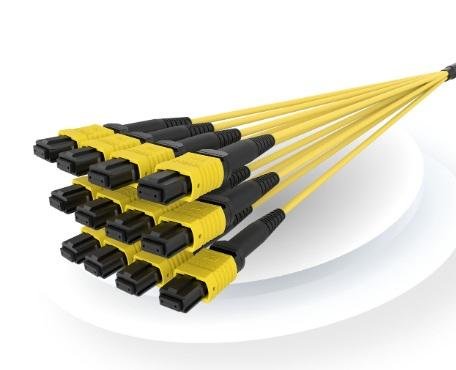
Reliable fiber connectivity has become essential for modern data centers, telecommunications systems, enterprise networks, and other environments where large amounts of information must move quickly and consistently. As network infrastructure becomes denser and bandwidth requirements continue to grow, every component within a fiber system matters. FSG Networks is relevant to this evolving field by focusing on fiber-optic connectivity solutions that support organized, high-performance network infrastructure. Among the components used in multi-fiber systems, the ferrule plays an important role in maintaining accurate fiber alignment and dependable optical connections.
For businesses researching an mt ferrule connector, understanding its purpose can help them make better decisions when planning or upgrading fiber-optic infrastructure. An MT ferrule is designed to align multiple optical fibers within a single interface, making it particularly useful for high-density connectivity applications. Instead of handling each fiber individually, multi-fiber technology allows several fibers to be positioned together, helping network designers create compact and structured connectivity systems.
What Is an MT Ferrule Connector?
An MT ferrule is a precision component used in multi-fiber optical connections. The term MT refers to a multi-fiber mechanical transfer design in which multiple fiber cores are aligned within a common ferrule. The ferrule provides the physical structure necessary to position the fibers accurately so that corresponding optical paths can connect.
In a conventional single-fiber connector, the ferrule typically holds one fiber. An MT ferrule, by comparison, is designed to accommodate multiple fibers in a row. This makes it especially useful in applications where high connection density is required.
The ferrule may be small, but its role is significant. Optical signals depend on accurate alignment between fibers. If the fibers are not positioned correctly, the connection can experience increased insertion loss or other performance issues. Precision manufacturing and appropriate handling are therefore important when working with MT-based fiber components.
Why Fiber Alignment Matters
Fiber-optic communication relies on light traveling from one fiber to another with as little disruption as possible. The core of an optical fiber is extremely small, so even minor alignment differences can influence the quality of an optical connection.
An MT ferrule helps maintain the relative position of multiple fibers. Its design provides a structured way to keep the fibers aligned so that they can interface with another compatible multi-fiber component.
This becomes increasingly important as network density increases. When dozens or hundreds of fiber connections are required within a limited area, using multi-fiber components can simplify the physical organization of the infrastructure while supporting the requirements of high-speed networks.
The Role of MT Ferrules in High-Density Fiber Systems
Modern data centers often contain a large number of switches, servers, storage systems, patching equipment, and other networking hardware. Every device may require multiple connections, creating significant cabling requirements.
Multi-fiber systems can help address this challenge by consolidating several fiber connections into compact interfaces. MT ferrules are an important part of this type of architecture because they provide the fiber alignment mechanism within compatible multi-fiber connectors.
A well-designed high-density system can make better use of available rack and cable-management space. It can also make the overall infrastructure easier to organize, particularly when multi-fiber trunks and other structured cabling components are used alongside appropriate connectors and adapters.
How MT Ferrules Support Reliable Fiber Connections
Reliability in fiber networking depends on many factors, including fiber quality, connector design, alignment, cleanliness, installation practices, and compatibility between components. The MT ferrule contributes to this equation by providing precise positioning for multiple fibers.
For a multi-fiber connection to work effectively, the fibers on both sides need to align with their corresponding counterparts. A properly manufactured ferrule helps establish this alignment through its precision structure.
However, a ferrule alone cannot guarantee network performance. It must be used with compatible components and installed according to appropriate practices. Network designers should therefore consider the complete connection rather than evaluating the ferrule separately from the rest of the system.
MT Ferrule Connector Applications
MT ferrules Connector can be found in a variety of fiber-optic applications where multiple fibers need to be managed through a compact interface. Data centers are one important environment because they require high-density connections between equipment and distribution systems.
They can also be relevant to structured fiber cabling, telecommunications infrastructure, parallel optical systems, and other network environments where multi-fiber connectivity is practical.
The exact configuration depends on the application. Fiber count, connector type, transmission requirements, physical space, and equipment compatibility all influence which components are appropriate.
Connection to MPO Fiber Systems
MT ferrules are closely associated with multi-fiber connector technologies such as MPO systems. An MPO connector can contain multiple optical fibers within a single connector assembly, while the MT ferrule provides the internal alignment structure for those fibers.
This relationship makes the ferrule an important consideration when evaluating multi-fiber connectivity. A high-density connector system needs more than a housing or external interface; it also requires an accurate method for positioning the individual fibers.
Organizations planning an MPO-based infrastructure should therefore consider the quality and compatibility of the underlying multi-fiber components, including the ferrule technology used within the connector system.
Choosing the Right MT Ferrule
Selecting an appropriate ferrule requires more than choosing a component based on its name. The ferrule needs to match the intended connector and fiber configuration.
Important considerations may include fiber count, dimensional requirements, alignment characteristics, material properties, connector design, and the specific application in which the component will be used.
Businesses should also consider whether the component will integrate with their existing infrastructure. Compatibility between ferrules, connectors, fiber assemblies, and related components is essential for creating a functional optical connection.
Working with a knowledgeable fiber connectivity supplier can make this evaluation easier, particularly when an installation involves numerous components or a high-density network architecture.
Why Precision Manufacturing Is Important
Fiber-optic components require a high degree of dimensional accuracy. Because the optical fibers are extremely small, the physical position of each fiber inside a multi-fiber ferrule matters.
The quality of the ferrule can influence how consistently fibers are positioned during mating. Manufacturing precision therefore becomes an important consideration when organizations evaluate components for demanding network environments.
Material selection can also matter. Fiber-optic components need to maintain their physical characteristics under the conditions in which they are intended to operate. The specific material and construction should be appropriate for the connector design and application.
The Importance of Clean Fiber Connections
Even a precisely manufactured MT ferrule can perform poorly if optical surfaces are contaminated. Dust, particles, oils, and other contaminants can interfere with the optical interface and affect connection performance.
Cleaning and inspection should therefore be treated as standard parts of fiber installation and maintenance. Technicians should follow appropriate procedures for handling and cleaning fiber-optic components rather than assuming that a newly installed connector is automatically free from contamination.
Proper handling is particularly important in high-density systems because a problem affecting one connection can become more difficult to diagnose when many similar connections are installed close together.
MT Ferrule Solutions for Growing Networks
Network requirements rarely remain unchanged. Organizations may add servers, increase storage capacity, upgrade switches, or adopt applications that require greater bandwidth. A fiber infrastructure that cannot accommodate these changes can become a limitation.
Multi-fiber connectivity provides one approach to creating a more scalable architecture. By consolidating multiple fibers into compact connection points, it can help organizations manage increasing connection density without relying entirely on large numbers of individual fiber interfaces.
This does not mean every network should automatically use MT-based technology. The right architecture depends on the equipment, transmission requirements, physical layout, and long-term objectives of the installation.
Common Mistakes When Selecting Fiber Components
One common mistake is focusing on the connector housing without considering the internal alignment components. In a multi-fiber system, the ferrule is an important part of the connection and should be evaluated accordingly.
Another mistake is overlooking compatibility. A component may appear physically similar to another product but still have specifications that make it unsuitable for a particular application.
Poor cleaning and handling practices can create additional problems. Optical components should be protected from contamination during storage, installation, and maintenance.
Finally, organizations should avoid choosing components solely around immediate requirements. Considering potential expansion can help create infrastructure that remains useful as network demands change.
Where FSG Networks Fits Into Fiber Connectivity Planning
FSG Networks can be relevant to organizations looking at fiber-optic components as part of a broader connectivity strategy. When evaluating an MT-based solution, the objective should be to understand how the ferrule, connector, cable assembly, and other components will work together within the intended network.
This system-level approach is more useful than treating a single component as an isolated purchase. Proper planning can help organizations select compatible parts, maintain organized cabling, and build infrastructure that supports their operational requirements.
For businesses dealing with high-density fiber environments, understanding the technical role of each component can also make conversations with suppliers and network installers more productive.
MT Ferrule Connector for Modern Fiber Infrastructure
As network speeds and connection densities continue to increase, precision fiber components will remain important. The MT ferrule provides a practical mechanism for aligning multiple fibers within compact multi-fiber connectivity systems, making it relevant to applications where space, organization, and optical performance all matter.
For organizations considering an mt ferrule connector as part of a high-density fiber network, the best approach is to evaluate the complete system. Fiber count, connector compatibility, alignment requirements, cable design, cleanliness, and future expansion should all be considered before selecting components.
Frequently Asked Questions
What does MT mean in fiber optics?
MT generally refers to a multi-fiber mechanical transfer design. An MT ferrule is structured to align multiple optical fibers within a common component.
Is an MT ferrule the same as an MPO connector?
No. They are related but not identical. An MPO is a multi-fiber connector assembly, while an MT ferrule is the precision component used to align multiple fibers within compatible multi-fiber connector designs.
Why is fiber alignment important?
Accurate alignment helps ensure that corresponding fiber cores meet correctly. Poor alignment can increase optical loss and affect connection performance.
Are MT ferrules useful in high-density networks?
Yes. Their multi-fiber design makes them relevant to high-density applications where multiple optical fibers need to be aligned and connected within a compact interface.
Conclusion
Reliable fiber networks depend on the performance and compatibility of many individual components. Although an MT ferrule is a relatively small part of a fiber-optic system, its role in accurately positioning multiple fibers makes it important for multi-fiber connectivity.
For data centers, telecommunications environments, and other high-density applications, understanding ferrule design, fiber alignment, connector compatibility, cleanliness, and future scalability can help organizations make more informed infrastructure decisions. FSG Networks provides a relevant focus for businesses exploring these connectivity requirements and looking to understand how MT-based components can fit into a reliable fiber network.
A successful fiber infrastructure is ultimately about more than one component. It is about creating a complete, compatible, and well-planned system in which every connection supports the performance and manageability of the network as a whole.

 English
 Arabic
 French
 Spanish
 Portuguese
 Deutsch
 Turkish
 Dutch
Dutch
 Russian
 Romaian
 Portuguese (Brazil)
 Tiếng Việt