
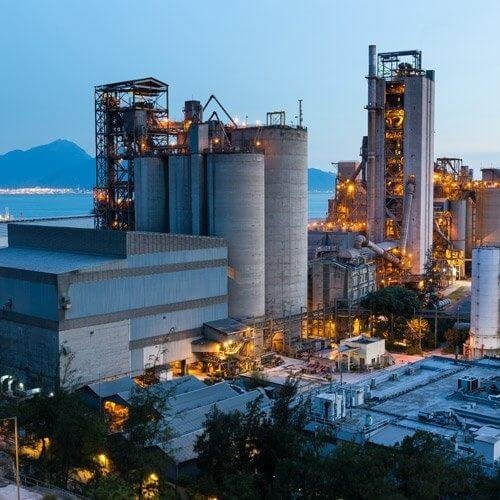
Selecting a valve manufacturer for a refinery or petrochemical project involves a lot more than comparing unit prices on a bid tabulation. The wrong choice shows up years later, in the form of premature seat wear, failed hydrotests, or documentation gaps that hold up a plant's commissioning schedule. Here's what actually differentiates valve manufacturers capable of meeting refinery and petrochemical demands from those that only look capable on paper.
Quality Certifications and Standards Compliance to Look For
Start with the certifications that back up a manufacturer's claims: ISO 9001 quality management certification is baseline, but for refinery-grade valves, API monogram licensing (where applicable to the valve type) and demonstrated compliance with API 600, API 602, API 609, ASME B16.34, and NACE MR0175/ISO 15156 matter far more. Ask for sample test certificates and material certifications from past projects, not just a certificate number — the documentation quality tells you a lot about how the manufacturer will support your project later.
Manufacturing Capability and Material Traceability
A manufacturer's in-house capability — casting, forging, machining, and heat treatment — directly affects both quality consistency and lead time control. Full material traceability, from raw material heat number through to the finished valve, is non-negotiable for sour service or high-temperature hydrogen applications, since any gap in that chain makes NACE or API RP 941 compliance impossible to verify after the fact.
Testing, Inspection, and Third-Party Witness Options
Every valve should leave the factory with documented API 598 shell and seat test results, and for fire-safe or fugitive-emission-rated valves, evidence of type testing to API 607/6FA or ISO 15848. For critical service valves, the manufacturer should readily support third-party inspection witnessing — a manufacturer that resists third-party witness requests is signaling something worth paying attention to.
Documentation Package and Technical Support
Refinery projects run on documentation: material test certificates, dimensional inspection reports, hydrotest records, and NACE compliance statements all need to be complete, accurate, and delivered on schedule to support commissioning. Beyond the paperwork, a manufacturer with genuine applications engineering support — able to advise on trim selection for severe service or material selection for a specific corrosive stream — adds real value that a pure price-quote supplier can't match.
Lead Time, Customization, and After-Sales Service
Refinery and petrochemical projects often need valves configured outside a standard catalog spec — special trim, non-standard end connections, or extended stem designs for insulated lines. A manufacturer's willingness and capability to engineer these variations, combined with realistic lead time commitments, often matters more to a project schedule than the per-unit price. After-sales support, including spare parts availability and field service for troubleshooting, extends that relationship well past the initial delivery.
Track Record in Similar Projects
Past project experience in refinery and petrochemical service is one of the most reliable indicators of future performance, since it demonstrates a manufacturer has already navigated the documentation, testing, and coordination demands of a comparable project rather than encountering them for the first time on yours. Ask for references tied to specific service conditions relevant to your application — sour service, high-temperature hydroprocessing, or severe-service trim — rather than a generic project list. A manufacturer that can speak specifically to how it handled a similar material or service challenge on a prior order is a far stronger signal than general company size or years in business alone.
Evaluating a Manufacturer Beyond the Price Quote
The lowest bid on a valve package is rarely the lowest total cost once premature failures, documentation gaps, and delayed deliveries are factored in. Evaluating manufacturers on certification depth, traceability, testing rigor, and technical support gives a far more accurate picture of what a project will actually experience over the valve's service life.
Freture Techno Pvt. Ltd. Refineries & Petrochemical Industry Valve Manufacturers combines API- and ASME-compliant manufacturing, full material traceability, and dedicated applications engineering support for refinery and petrochemical valve projects. Reach out to our team to discuss your next project's requirements.

 English
 Arabic
 French
 Spanish
 Portuguese
 Deutsch
 Turkish
 Dutch
Dutch
 Russian
 Romaian
 Portuguese (Brazil)
 Tiếng Việt