
Selecting the right actuator type is one of the most important decisions in specifying a valve automation system for oil and gas operations. Choosing the wrong power source can mean unreliable performance, higher operating costs, or safety gaps in critical applications. This guide compares the three primary actuator technologies — pneumatic, electric, and hydraulic — to help engineers make the right call.
Why Actuator Type Selection Matters
An actuator's power source determines its speed, torque output, precision, and suitability for fail-safe operation. Choosing an actuator without evaluating available utilities, torque demands, and safety requirements at the installation site often results in poor performance or costly rework down the line.
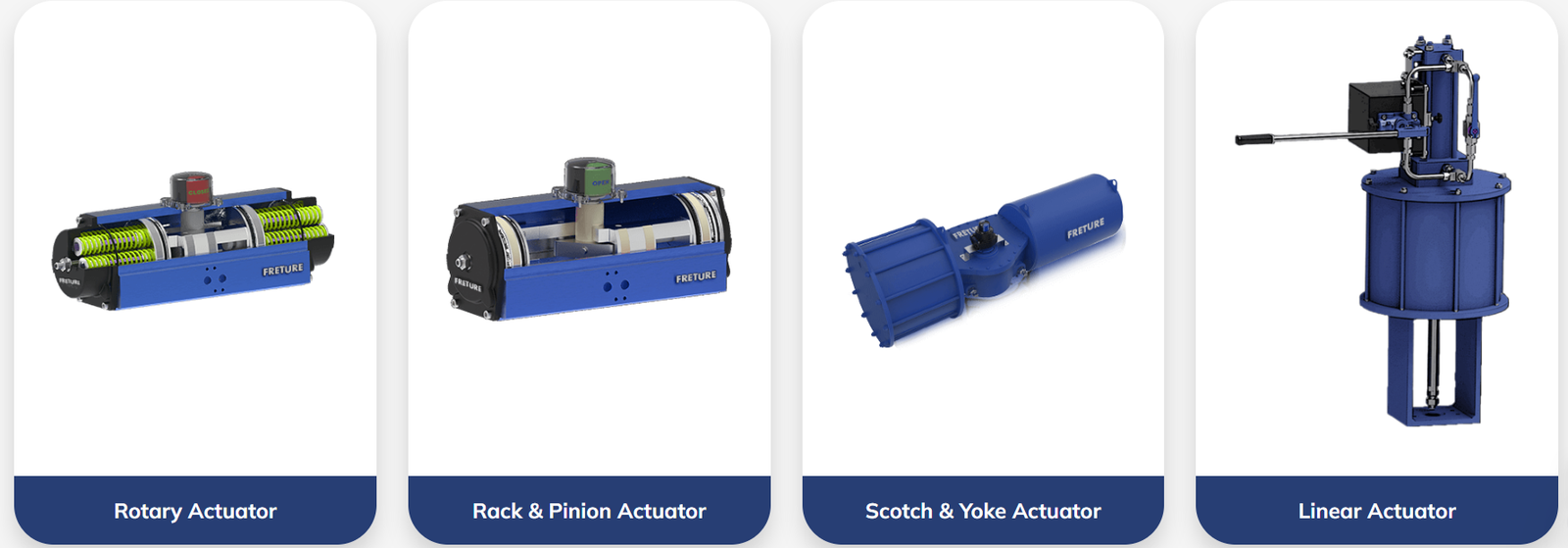
Pneumatic Actuators
Pneumatic actuators are the most widely used actuator type across oil and gas facilities with existing compressed air infrastructure.
Strengths:
- Fast response times, ideal for quick-acting isolation and ESD valves
- Simple, reliable fail-safe operation using spring-return mechanisms
- Lower maintenance complexity compared to hydraulic systems
- Well-suited for hazardous area classifications without special electrical certification
Limitations:
- Requires a reliable, clean compressed air supply
- Less precise positioning compared to electric actuators without added positioners
- Torque output is generally lower than hydraulic actuators
Best for: Emergency shutdown (ESD) valves, quarter-turn ball and butterfly valve automation, and facilities with existing plant air systems.
Electric Actuators
Electric actuators are gaining ground in oil and gas facilities that prioritize precision and remote control integration.
Strengths:
- High positioning accuracy, ideal for modulating control valves
- No dependency on air or hydraulic fluid supply
- Easy integration with SCADA/DCS systems and smart actuator diagnostics
- Lower long-term energy costs in many applications
Limitations:
- Higher upfront cost than pneumatic actuators
- Requires reliable power supply and proper hazardous area certification
- Fail-safe behavior typically requires battery backup or capacitor systems
Best for: Precise process control valves, remote pipeline installations without air supply, and facilities investing in digital/smart automation infrastructure.
Hydraulic Actuators
Hydraulic actuators deliver the highest torque output of the three types, making them essential for large or high-pressure valve applications.
Strengths:
- Highest torque-to-size ratio, ideal for large-diameter valves
- Smooth, controllable operation under heavy loads
- Reliable performance in high-pressure pipeline and subsea applications
Limitations:
- More complex installation, requiring hydraulic power units and fluid lines
- Higher maintenance requirements due to seals, fluid, and hydraulic components
- Potential environmental concerns from hydraulic fluid leaks
Best for: Large pipeline valves, subsea and offshore wellhead control, and high-pressure applications where pneumatic or electric torque isn't sufficient.
Quick Comparison Table
| Property | Pneumatic | Electric | Hydraulic |
|---|---|---|---|
| Torque output | Moderate | Moderate | High |
| Response speed | Fast | Moderate | Fast |
| Positioning accuracy | Moderate | High | Moderate |
| Fail-safe simplicity | Excellent | Requires backup | Good |
| Best application | ESD valves | Control valves | Large/high-pressure valves |
How to Choose the Right Actuator
- Determine required torque based on valve size, type, and process pressure.
- Assess available power infrastructure — compressed air, electrical supply, or hydraulic power units — at the installation site.
- Identify fail-safe requirements for safety-critical or ESD applications.
- Consider control system integration if remote monitoring or smart actuator diagnostics are priorities.
- Factor in total cost of ownership, including installation complexity and long-term maintenance.
Final Thoughts
There's no universally "best" actuator type — only the actuator best suited to your specific torque, control, and safety requirements. Oil and gas engineers who match actuator technology to their process conditions consistently achieve more reliable valve automation with fewer unplanned failures.
Already selected your actuator type? Read our next guide: Actuator Selection and Sizing Guide for Valve Automation in Oil & Gas Operations.

 English
 French
 Spanish
 Portuguese
 Deutsch
 Turkish
 Dutch
Dutch
 Italiano
 Russian
 Romaian
 Portuguese (Brazil)
 Tiếng Việt