
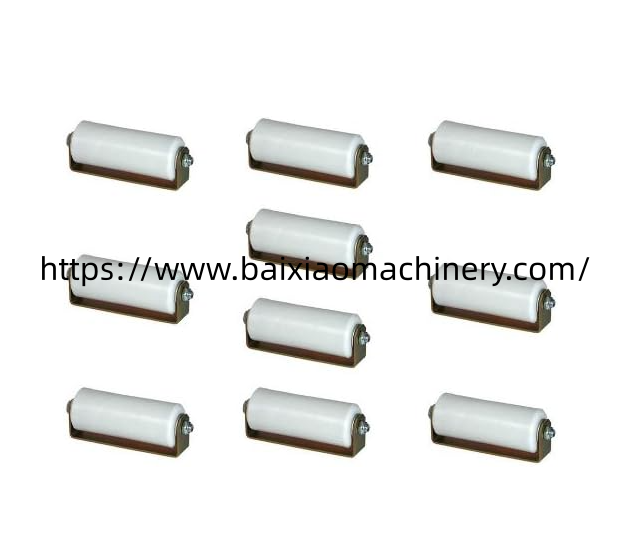
Across manufacturing environments, rollers help move, guide, press, and process materials while maintaining contact between machine components and work surfaces. When evaluating a Rubber Roller, buyers should consider more than its external appearance or general description. Rubber formulation, bonding quality, surface finish, and compatibility with the working environment all influence how the roller performs within a production system. Understanding these relationships helps manufacturers choose components that support consistent operations and suit the requirements of their equipment.
Material selection is one of the most important considerations in roller production. Rubber compounds can be developed to provide different balances of elasticity, friction, wear resistance, and resistance to environmental influences. Natural rubber and synthetic elastomers each have distinct characteristics, making them suitable for different operating conditions. Some applications require a surface that grips materials effectively, while others benefit from controlled friction or resistance to oils and cleaning agents. The correct compound depends on the material being processed and the conditions surrounding the roller.
The roller core also contributes to the overall construction. Metal cores are commonly used where structural stability and reliable integration with machinery are required. The rubber covering must bond securely to the core to support consistent contact during operation. Surface preparation, bonding methods, and curing processes can influence the quality of this connection. If the covering separates, becomes uneven, or deteriorates prematurely, production quality and maintenance requirements may be affected. Buyers should therefore consider both the rubber layer and the construction of the complete roller assembly.
Choosing a suitable roller begins with understanding the application. Printing equipment, packaging machinery, textile processing systems, woodworking machines, and material handling lines may require different surface properties. Buyers should identify the material being handled, the nature of surface contact, the surrounding environment, and the expected operating pattern. It is also useful to explain whether the roller needs to grip, guide, press, transfer, or protect the processed material. Sharing these details with a manufacturer helps narrow the available options and reduces the risk of selecting an unsuitable compound or surface finish.
Supplier evaluation should extend beyond product availability. Manufacturing consistency, rubber formulation expertise, core preparation, bonding quality, and finishing processes all influence the finished component. Buyers may wish to ask how the manufacturer inspects incoming materials, monitors production, and checks the finished roller for surface defects or other inconsistencies. Clear communication is particularly important for replacement rollers because the new component must work with existing machinery and production requirements. Samples, drawings, and application information can help establish a shared understanding before manufacturing begins.
Functional technology continues to improve roller manufacturing. Rubber compounding techniques allow manufacturers to adjust material characteristics for particular applications, while controlled curing helps establish the intended properties of the rubber covering. Grinding and finishing processes can create a surface suited to the required contact conditions. Depending on the application, a roller may need a smooth finish, a textured surface, or a specially developed profile. These features affect how the roller interacts with the processed material, making surface engineering an important part of product development rather than a purely cosmetic step.
User experience is closely connected to maintenance and operational reliability. A roller that performs consistently can help reduce interruptions caused by uneven feeding, unwanted surface marks, or premature wear. Easy inspection and suitable maintenance procedures can also help operators identify developing problems before they affect production. Cleaning requirements should be considered when the roller is exposed to adhesives, inks, dust, oils, or other residues. Choosing a compatible rubber compound and following the manufacturer's care recommendations can support more predictable service throughout the component's working life.
Design and appearance offer additional clues about manufacturing quality. A uniform rubber surface, clean edges, consistent finishing, and secure integration with the core contribute to a professional finished component. Surface texture should correspond to the intended function rather than visual preference alone. In some applications, a carefully finished surface helps protect delicate materials, while in others, a specific texture supports controlled traction or material transfer. Customization may also involve adapting the covering to the customer's machinery, production process, or material handling needs.
Zhejiang Province, Ruian Baixiao Machinery Co., Ltd. serves the machinery sector with products and solutions associated with industrial processing equipment. For businesses sourcing rollers or related machinery components, evaluating application requirements, material compatibility, manufacturing quality, and maintenance needs can help establish a more effective purchasing process. Buyers can explore the company's available products, review relevant equipment information, and discuss their requirements directly through its website: https://www.baixiaomachinery.com/.

 English
 Arabic
 French
 Spanish
 Portuguese
 Deutsch
 Turkish
 Dutch
 Russian
 Romaian
 Portuguese (Brazil)
 Tiếng Việt