
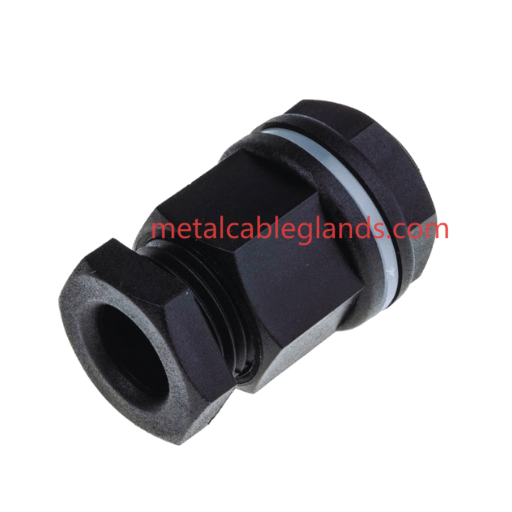
Cable damage often starts at small connection points that are easy to overlook during equipment design. When wiring passes through a narrow opening or sits close to a moving component, an Anti-Bending Cable Gland can help guide the cable into a more suitable position, while a Flexible Nylon Cable Gland offers a lightweight option for installations that need both cable support and environmental sealing. From automation equipment to outdoor electrical boxes, choosing the right fitting helps reduce strain around cable entries, keeps wiring neater, and makes routine servicing less troublesome. The goal is not simply to secure a cable, but to help it remain reliable throughout everyday use.
Protect Cables Where Stress Usually Begins
The area immediately outside an enclosure is often one of the most vulnerable parts of a cable installation. A cable may be pulled during assembly, pressed against nearby surfaces, or bent repeatedly whenever equipment moves. If the same point experiences excessive stress, the outer jacket can wear down and the cable may eventually require replacement.
A gland with a flexible, extended protective section helps support the cable as it leaves the enclosure. Instead of forcing the cable into an abrupt turn, this design encourages a smoother transition between the entry point and the surrounding wiring route.
This can be useful in compact machinery, control cabinets, lighting equipment, and electrical devices where available space is limited. However, the gland should complement sensible cable routing rather than replace it. Installers should avoid sharp edges, excessive tension, and bends tighter than the cable manufacturer's recommended minimum radius.
Choose Nylon Construction for Practical Installations
Nylon cable glands are popular in many electrical applications because they combine relatively low weight with useful mechanical strength and electrical insulation. Depending on the material grade and product design, they can suit equipment where corrosion resistance, straightforward handling, and cost-conscious assembly are important.
When comparing products, look beyond the material name. Check the specified nylon grade, flame-retardant properties, sealing components, and compatibility with the surrounding environment. Outdoor installations may need resistance to moisture and temperature changes, while industrial settings may require consideration of oils, cleaning chemicals, or other substances.
The sealing elements are equally important. Rubber or thermoplastic seals help form the connection between the cable, gland, and enclosure, but their performance depends on correct sizing and installation. Selecting a suitable combination of materials can help maintain the intended protection level without placing unnecessary pressure on the cable jacket.
Match Cable Size and Mounting Dimensions
A reliable installation begins with accurate measurements. Before selecting a gland, measure the cable's outside diameter and compare it with the product's stated clamping range. A cable that is too small may not be held securely, while one that is too large may be difficult to install or may compromise the sealing arrangement.
Thread compatibility also needs attention. Metric and PG threads are common in cable gland applications, but they use different sizing systems. Confirm the required thread, mounting-hole diameter, thread length, and available clearance inside the enclosure. This is particularly important when replacing an existing fitting or standardizing components across several production lines.
The product specifications for the listed anti-bending cable gland include multiple metric and PG sizes, with different cable ranges for different models. Reviewing the manufacturer's dimensional drawings helps buyers select a configuration that fits the actual cable and enclosure instead of relying on visual estimates.
Explore Product Options With Metalcableglands
Every installation has its own priorities. A factory control panel may need organized wiring and dependable strain relief, while outdoor lighting equipment may place greater emphasis on sealing and weather exposure. Equipment with frequently moved cables may need particular attention to flexibility and the expected movement around the connection.
When evaluating options from Metalcableglands, compare the cable diameter range, thread specification, material, sealing design, and operating temperature limits. The nylon anti-bending cable gland product page provides technical details that can help narrow the selection. For applications with unusual environmental or mechanical demands, confirm the product's stated ratings and suitability before ordering.
Purchasing teams should also consider installation consistency. Choosing a clearly specified model helps installers repeat the same assembly process across multiple units. For larger orders, confirming dimensions, colors, and quantities in advance can reduce delays and minimize the risk of receiving components that do not match the project requirements.
Make Maintenance Easier Through Better Cable Support
Good cable management helps technicians identify connections, inspect wiring, and perform repairs without unnecessary disruption. A well-positioned gland can support a tidy cable route and reduce the chance that accidental pulling will be transferred directly to the enclosure opening.
During installation, tighten the fitting according to the manufacturer's instructions and check that the cable is securely held without excessive compression. Make sure the flexible section is not trapped against a panel or forced into an unnatural position. Where equipment experiences vibration or repeated movement, include cable entry points in routine maintenance inspections.
The best results come from combining suitable components with proper installation practices. For technical details and more cable management options, visit https://www.metalcableglands.com/. Selecting the right gland for the cable size, mounting arrangement, and working environment can help protect wiring and support dependable equipment operation over time.

 Arabic
 French
 Spanish
 Portuguese
 Deutsch
 Turkish
 Dutch
Dutch
 Italiano
 Russian
 Romaian
 Portuguese (Brazil)
 Tiếng Việt