
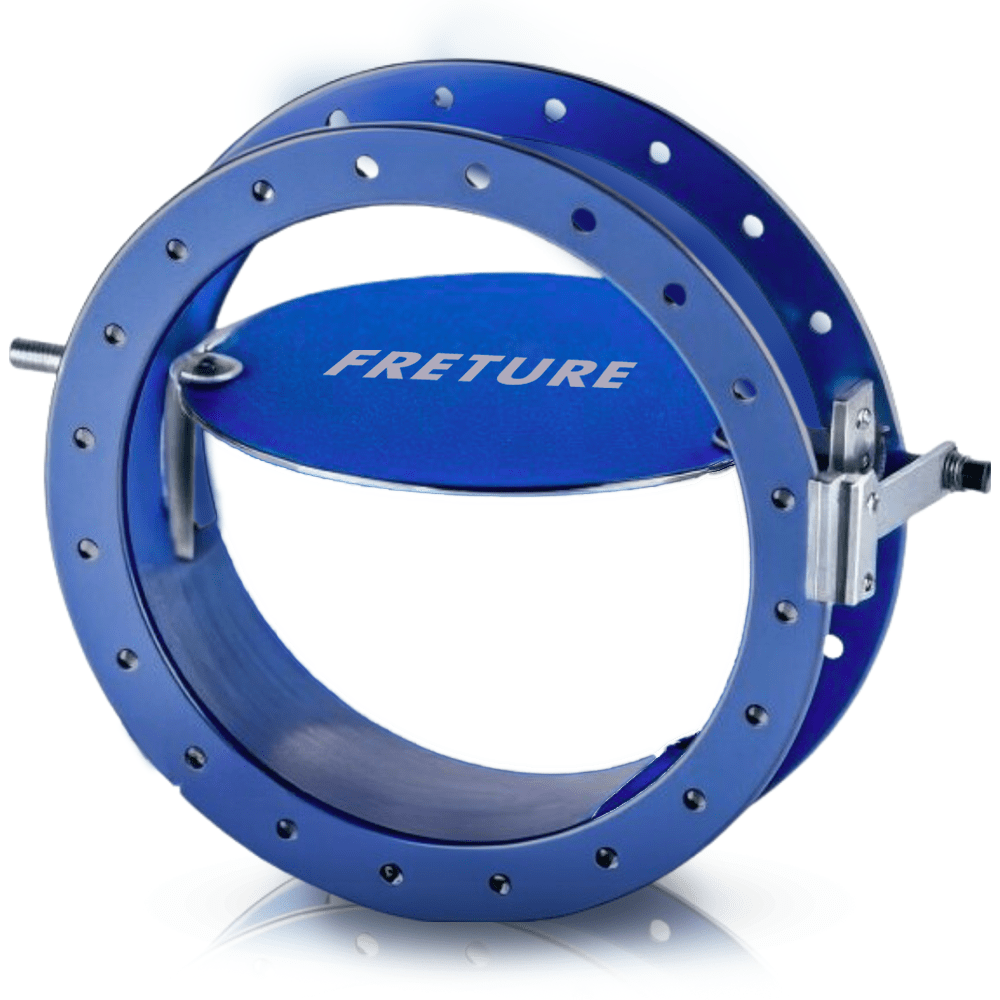
How does a backdraft damper work? A backdraft damper works by allowing air or gas to flow in one direction while automatically restricting reverse airflow. The pressure generated by forward airflow opens the damper blades, while reduced or reversed airflow allows the blades to return to the closed position. Depending on the design, gravity or springs may be used to assist the closing action.
Backdraft dampers are widely used in HVAC systems, exhaust ducts, ventilation equipment and industrial air-handling applications where maintaining the correct airflow direction is important.
What Is the Working Principle of a Backdraft Damper?
The backdraft damper working principle is relatively simple. The damper contains one or more blades positioned inside a duct or airflow passage.
When air moves in the required direction, the airflow pressure acts against the blades and moves them toward the open position. This allows air to pass through the duct.
When the airflow decreases or stops, the blades return toward their closed position. If air attempts to move in the opposite direction, the blades close further and restrict the reverse flow.
This automatic operation is why a backdraft damper is also called a non-return damper or one-way airflow damper.
How Do Backdraft Damper Blades Move?
Blade movement depends on the damper design.
In a gravity backdraft damper, the weight of the blades helps them return to the closed position. The damper opens when the forward airflow produces enough force to move the blades.
In a spring-loaded backdraft damper, springs provide additional closing force. This can help the blades close more positively when airflow decreases or reverses.
The blade design must be matched to the operating airflow. If the airflow pressure is too low, the damper may not open completely. If the closing force is too low, reverse airflow may not be adequately restricted.
Backdraft Damper Operation
A typical operating sequence can be explained in three stages.
1. Forward Airflow
When air moves in the intended direction, pressure pushes the blades open. The opening allows airflow to pass through the duct.
2. Reduced Airflow
When the fan or blower reduces speed or stops, airflow pressure decreases. The blades begin moving toward the closed position.
3. Reverse Airflow
If air attempts to flow backward, the blades close and restrict the reverse movement. This helps prevent unwanted air circulation through the duct.
Where Are Backdraft Dampers Used?
Backdraft dampers are commonly installed downstream of fans and exhaust equipment. They can help prevent outside air from entering a building or process system when equipment is not operating.
Typical backdraft damper applications include:
- HVAC systems
- Fresh-air and exhaust ventilation
- Industrial exhaust systems
- Fan discharge ducts
- Air-handling units
- Boiler and furnace systems
- Power generation facilities
- Manufacturing plants
- Dust extraction systems
- Industrial process ventilation
Backdraft Damper Materials
Material selection depends on the airflow medium, temperature and environmental conditions.
Carbon steel can be used for many general industrial applications, while stainless steel may be preferred where corrosion resistance or specific process conditions require it.
The blade, frame, shaft, bearings and sealing components should all be selected according to operating conditions.
Backdraft Damper vs Non-Return Valve
A backdraft damper and a non-return valve both prevent reverse flow, but they are generally used in different systems.
A non-return valve is commonly designed for liquid or gas piping systems, whereas a backdraft damper is primarily associated with air and gas movement through ducts and ventilation systems.
Therefore, application, medium, pressure, temperature and installation arrangement should be considered before choosing either device.
Advantages of Backdraft Dampers
The main advantages include:
- Automatic airflow direction control
- Prevention of reverse airflow
- Simple mechanical operation
- Reduced need for external controls
- Suitable for HVAC and industrial ventilation
- Available in different sizes and materials
- Can be designed for specific airflow conditions
How to Improve Backdraft Damper Performance
Correct sizing is essential for reliable operation. The damper should be selected according to duct dimensions, airflow volume, velocity, pressure and temperature.
Installation should also follow the manufacturer's recommended orientation. Poor installation or incorrect sizing can increase pressure drop, reduce airflow or prevent proper blade movement.
Regular inspection should check the blades, pivots, bearings, seals and surrounding ductwork for dust accumulation, corrosion or mechanical damage.
Industrial Backdraft Damper Manufacturer in India
For industrial applications, working with an experienced backdraft damper manufacturer in India can help ensure that the damper matches the actual process conditions.
Freture Techno provides industrial damper solutions for applications requiring controlled airflow, isolation and reverse-flow prevention. Dampers can be selected according to duct size, operating conditions, material requirements and installation needs.
Understanding how a backdraft damper works makes it easier to choose the right design for an HVAC or industrial ventilation system. By using forward airflow to open and gravity or spring action to close, these dampers provide a straightforward method of preventing unwanted reverse airflow.

 English
 Arabic
 French
 Spanish
 Portuguese
 Deutsch
 Turkish
 Dutch
Dutch
 Italiano
 Russian
 Romaian
 Portuguese (Brazil)