
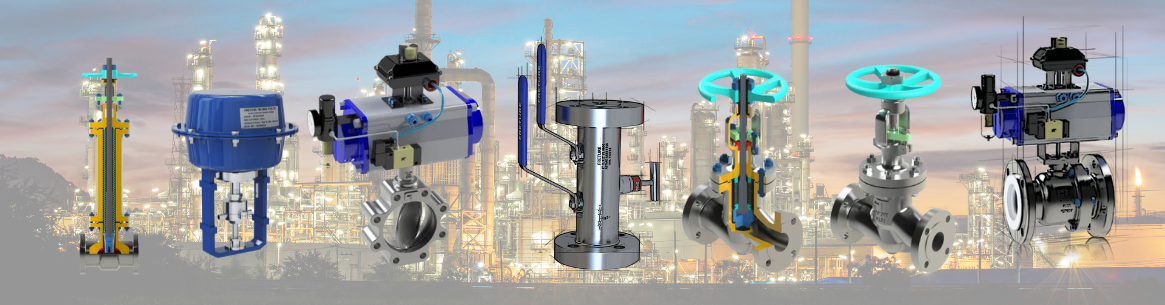
Chemical processing is one of the most demanding process industries for valve performance, handling aggressive acids, caustics, solvents, and high-purity reagents. In this environment, industrial valve solutions for process industries aren't just flow control devices — they're the barrier between hazardous chemicals and the surrounding facility, workforce, and environment.
Selecting the wrong valve material or design can lead to leaks, contamination, product loss, or catastrophic failure. This makes valve specification one of the most consequential engineering decisions in chemical plant design, and a core reason process industries invest heavily in purpose-engineered valve solutions.
The Core Challenge: Chemical Compatibility
Unlike water or air systems, chemical processing lines carry media that can rapidly degrade standard metals and elastomers. Common challenges include:
- Corrosive acids and bases (sulfuric acid, sodium hydroxide, hydrochloric acid) that attack carbon steel and standard stainless grades
- Aggressive solvents that can swell or dissolve rubber seals and gaskets
- High-purity requirements in specialty and pharmaceutical-adjacent chemical production, where trace contamination is unacceptable
- Abrasive slurries in mineral processing and pigment manufacturing
Because of this, industrial valve solutions for process industries must match body, trim, and seat materials precisely to the chemical compatibility chart for each specific process line — not select generically.
Valve Types Commonly Used in Chemical Process Industries
Diaphragm Valves
Ideal for corrosive, abrasive, or slurry-based media, diaphragm valves isolate the process fluid entirely from the valve body's mechanical components using a flexible diaphragm, typically lined with PTFE or PFA. This design virtually eliminates leak paths, making it a preferred valve solution for hazardous chemical service.
Lined Butterfly and Ball Valves
PTFE, PFA, and rubber-lined butterfly and ball valves offer a cost-effective way to handle moderately corrosive chemicals while maintaining quarter-turn operation for fast shutoff and throttling.
Plug Valves
Lined plug valves provide excellent chemical resistance and tight shutoff, commonly used in acid transfer and batch processing applications where full-bore flow is required.
Control Valves with Specialty Trim
For processes requiring precise dosing or blending, control valves with Hastelloy, titanium, or ceramic-lined trim manage highly corrosive or high-purity fluids where standard trim would fail prematurely.
Material Selection Guide
| Media Type | Recommended Valve Material |
|---|---|
| Sulfuric/hydrochloric acid | PTFE-lined, Alloy 20, or Hastelloy |
| Sodium hydroxide (caustic) | PVC, CPVC, or lined steel |
| Chlorine and chlorinated compounds | PTFE-lined with Hastelloy trim |
| Solvents (ketones, alcohols) | Stainless steel with PTFE seats |
| High-purity/specialty chemicals | Electropolished 316L stainless |
Safety and Compliance Considerations
Chemical processing facilities operate under strict regulatory oversight, and any industrial valve solution for process industries in this sector must account for:
- OSHA Process Safety Management (PSM) requirements for highly hazardous chemicals
- ASME B31.3 process piping code compliance
- Fugitive emissions standards (EPA Method 21, ISO 15848) to limit VOC leakage
- Fire-safe certification (API 607) where flammable chemicals are present
Valves used in PSM-covered processes often require documented maintenance histories and periodic inspection, making valve traceability and manufacturer documentation an operational necessity, not just a procurement nicety.
Automation in Chemical Valve Systems
Batch processing, blending, and reaction control increasingly rely on automated valve solutions integrated with distributed control systems (DCS). Pneumatic actuators paired with positioners allow precise dosing control, while smart positioners provide diagnostic feedback on valve health — reducing the risk of undetected seal degradation in corrosive service, which is often the first sign of an impending leak.
Reducing Total Cost of Ownership
While corrosion-resistant industrial valve solutions often carry a higher upfront cost than standard carbon steel equivalents, they typically deliver lower total cost of ownership by:
- Reducing unplanned shutdowns from seal or body failure
- Minimizing product loss and off-spec batches from contamination
- Lowering maintenance frequency in aggressive service
- Avoiding costly environmental incidents and associated regulatory penalties
Conclusion
In chemical processing, the valve is often the weakest link if not specified correctly — and the strongest safeguard when it is. Robust industrial valve solutions for process industries match valve type and material to the exact chemical, concentration, temperature, and pressure profile of each process line, protecting product purity, worker safety, and regulatory compliance.
Not sure which valve material fits your process chemistry? Share your media, concentration, and operating conditions with a valve application specialist for a tailored recommendation.

 Arabic
 French
 Spanish
 Portuguese
 Deutsch
 Turkish
 Dutch
Dutch
 Italiano
 Russian
 Romaian
 Portuguese (Brazil)
 Tiếng Việt