
A safe home is essential for the health and comfort of every family. However, some household dangers cannot be seen, smelled, or detected without proper testing. Radon is one such danger. This naturally occurring radioactive gas enters buildings from the soil and can accumulate indoors, especially in basements and lower levels. Long-term exposure to elevated radon concentrations increases the risk of lung cancer. The only way to know the radon level in your home is to test it.
Searching for a radon mitigation specialist near me is an important step when your home has elevated radon levels or you want professional advice about reducing exposure. A qualified specialist can assess your property, recommend a suitable mitigation method, and help verify whether the system is working effectively. Understanding the process can help you make a confident decision and protect your household over the long term.
What Does a Radon Mitigation Specialist Do?
A radon mitigation specialist is trained to evaluate indoor radon problems and develop solutions to lower radon concentrations. Their work involves more than simply installing a pipe or fan. A professional should consider the building's foundation, basement layout, soil conditions, and existing ventilation before recommending a solution.
Radon Testing and Assessment
The first step is understanding how much radon is present inside the property. A specialist can help arrange appropriate testing and interpret the results. Long-term testing is particularly useful for estimating average radon exposure under normal living conditions.
In Canada, Health Canada recommends taking action when a long-term test indicates radon concentrations above the national guideline of 200 becquerels per cubic metre (Bq/m³).
Customized Mitigation Solutions
Every building is different. A detached home with a concrete basement may require a different solution from a townhouse with a crawl space. A qualified professional evaluates these differences before selecting and installing a system.
This tailored approach helps address the source of the problem instead of relying on temporary measures that may not adequately reduce radon.
Why Should You Search for a Radon Mitigation Specialist Near Me?
Choosing a professional who serves your local area can make the process more convenient. Local specialists may be familiar with common building designs, regional construction practices, and the radon concerns affecting properties in the community.
Professional Knowledge and Experience
An experienced specialist understands how radon enters buildings through foundation cracks, construction joints, gaps around pipes, and other openings. They can identify potential entry routes and recommend suitable measures based on test results.
Reliable Installation and Follow Up
Proper installation is essential for effective radon reduction. A specialist can explain how the system operates, what maintenance it needs, and how to confirm that radon levels have decreased after installation.
When comparing providers, ask about their qualifications, relevant experience, written estimates, warranties, and post-installation testing procedures.
Better Long Term Protection
A properly designed mitigation system can significantly reduce radon concentrations. Health Canada reports that professionally installed systems typically reduce radon levels by more than 80% in most homes, although results depend on the property and the system used.
Common Radon Mitigation Methods
A professional will recommend a method based on the building's structure and measured radon levels.
Active Sub Slab Depressurization
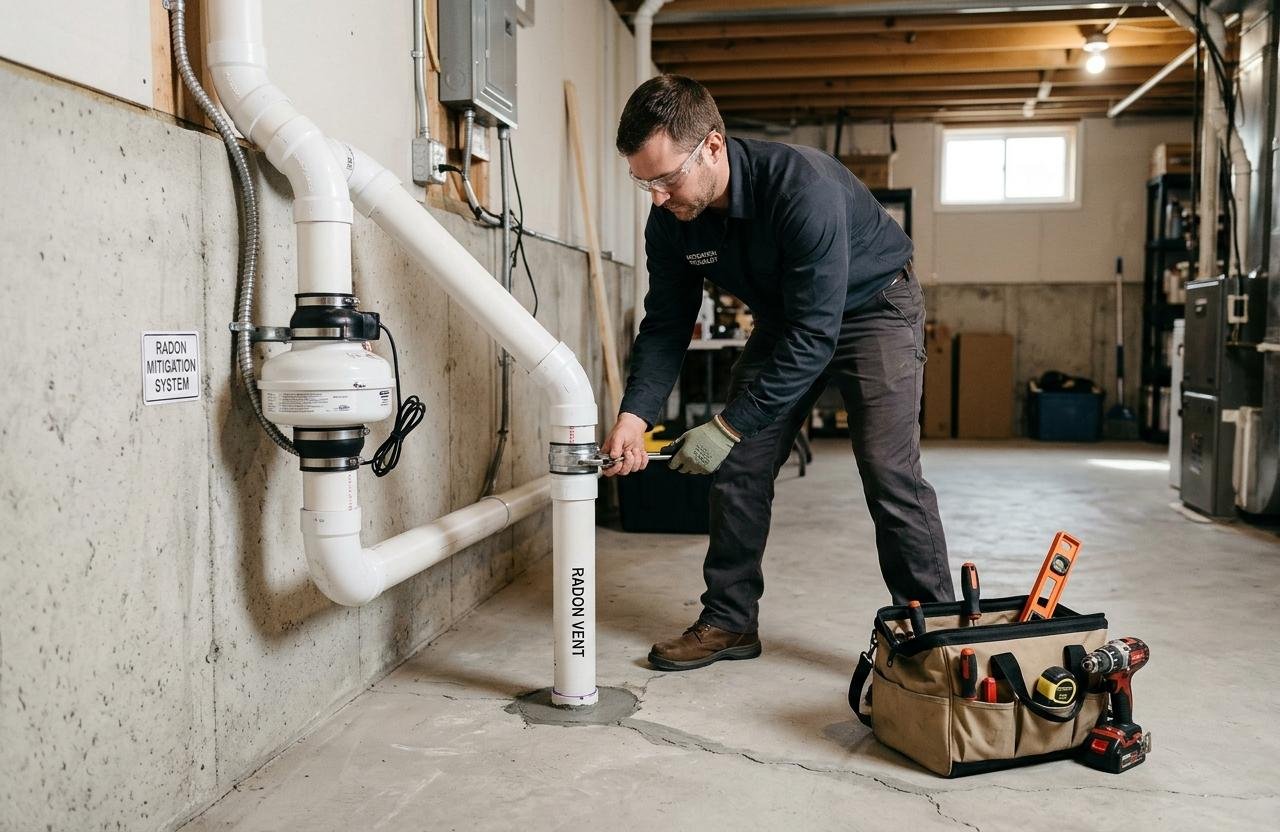
Active sub-slab depressurization is one of the most widely used methods for homes with concrete foundations. A pipe connects to a suction point beneath the basement floor, while a fan draws soil gas from below the building and releases it safely outdoors.
This process helps prevent radon from entering the indoor environment. The specialist selects the appropriate pipework, fan, and suction location to suit the property.
Crawl Space Radon Mitigation
Properties with crawl spaces or exposed soil may need a different approach. A specialist may recommend covering exposed ground with a suitable sealed membrane and using a depressurization system to remove soil gases.
The exact solution depends on the crawl space design, accessibility, and the severity of the radon problem.
Sealing Cracks and Openings
Sealing visible foundation cracks and gaps around service pipes can support a mitigation system. However, sealing alone is not always enough to control elevated radon levels. It is usually considered part of a broader strategy rather than a guaranteed standalone solution.
How to Choose the Right Radon Mitigation Professional
Finding a reliable specialist requires more than comparing prices. The quality of the assessment, installation, and follow-up process matters.
Consider these important factors before hiring a contractor:
-
Certification: In Canada, check whether the professional holds the appropriate certification from the Canadian National Radon Proficiency Program (C-NRPP).
-
Relevant experience: Ask about previous projects involving foundations similar to yours.
-
Clear estimates: Request an itemized quote covering equipment, installation, testing, and any additional work.
-
Testing after installation: Confirm how the contractor will verify the system's performance.
-
Maintenance advice: Ask how to monitor the fan and when to repeat radon testing.
-
Written documentation: Choose a provider who explains the recommended solution and provides clear records of the work.
The C-NRPP directory can help homeowners identify qualified radon professionals in Canada.
What Happens During a Radon Mitigation Appointment?
Understanding the process can make your first appointment less stressful.
First, the specialist discusses your concerns, reviews any existing radon test results, and assesses the property. Additional diagnostic testing may be necessary to understand how soil gas moves beneath the foundation.
Next, the specialist recommends a mitigation design and explains the installation process. Once you approve the work, the contractor installs the appropriate equipment and checks that the system operates as intended.
Finally, follow-up testing helps establish whether radon concentrations have decreased. Homeowners should also understand how to recognize a fan malfunction and arrange future testing to monitor performance.
For many homes, installation can be completed in less than a day, although building conditions and system requirements can affect the schedule.
What Factors Affect Radon Mitigation Costs?
The cost of hiring a radon mitigation specialist near me varies according to several factors. These include the size and layout of the property, foundation type, accessibility, number of suction points, equipment requirements, and any additional sealing or crawl space work.
A straightforward installation may cost less than a project involving a complex foundation or multiple building levels. Repairs to an existing mitigation system can also differ in price depending on whether the issue involves the fan, pipework, or system design.
Request a written estimate and compare the proposed work rather than choosing a contractor based on the lowest price alone. A well-planned system with appropriate verification can offer better long-term value.
Why Choose Ottawa Radon Pros?
Ottawa Radon Pros, available at ottawaradon.pro, provides radon testing, mitigation, and radon removal services for homeowners and businesses in Ottawa, Kanata, Cornwall, and surrounding areas. The company describes services including active sub-slab depressurization, active soil depressurization, and mitigation system repairs or upgrades. Its focus on evaluating individual properties helps customers explore solutions suited to their building's needs. If you are concerned about elevated radon levels, you can contact Ottawa Radon Pros to discuss your test results, request an assessment, and learn which mitigation options may be appropriate for your property.
Conclusion
Finding the right radon mitigation specialist near me is an important step toward reducing indoor radon exposure and creating a safer living environment. Professional testing, a customized mitigation system, and follow-up measurements all contribute to effective radon management.
Before hiring a contractor, check their certification, experience, installation process, and testing arrangements. For property owners in Ottawa and nearby communities, Ottawa Radon Pros is one local service provider to consider. Taking action based on reliable test results can help protect your household and provide greater peace of mind.

 English
 Arabic
 French
 Spanish
 Portuguese
 Deutsch
 Turkish
 Italiano
 Russian
 Romaian
 Portuguese (Brazil)
 Tiếng Việt