
Introduction
Every business faces legal risks, but not every business recognises them before they become expensive problems. A poorly drafted contract, incomplete company records, an unresolved employment dispute, or a missed regulatory obligation can affect operations, profits, and reputation. For growing businesses in Pakistan, identifying these risks early is an important part of responsible management.
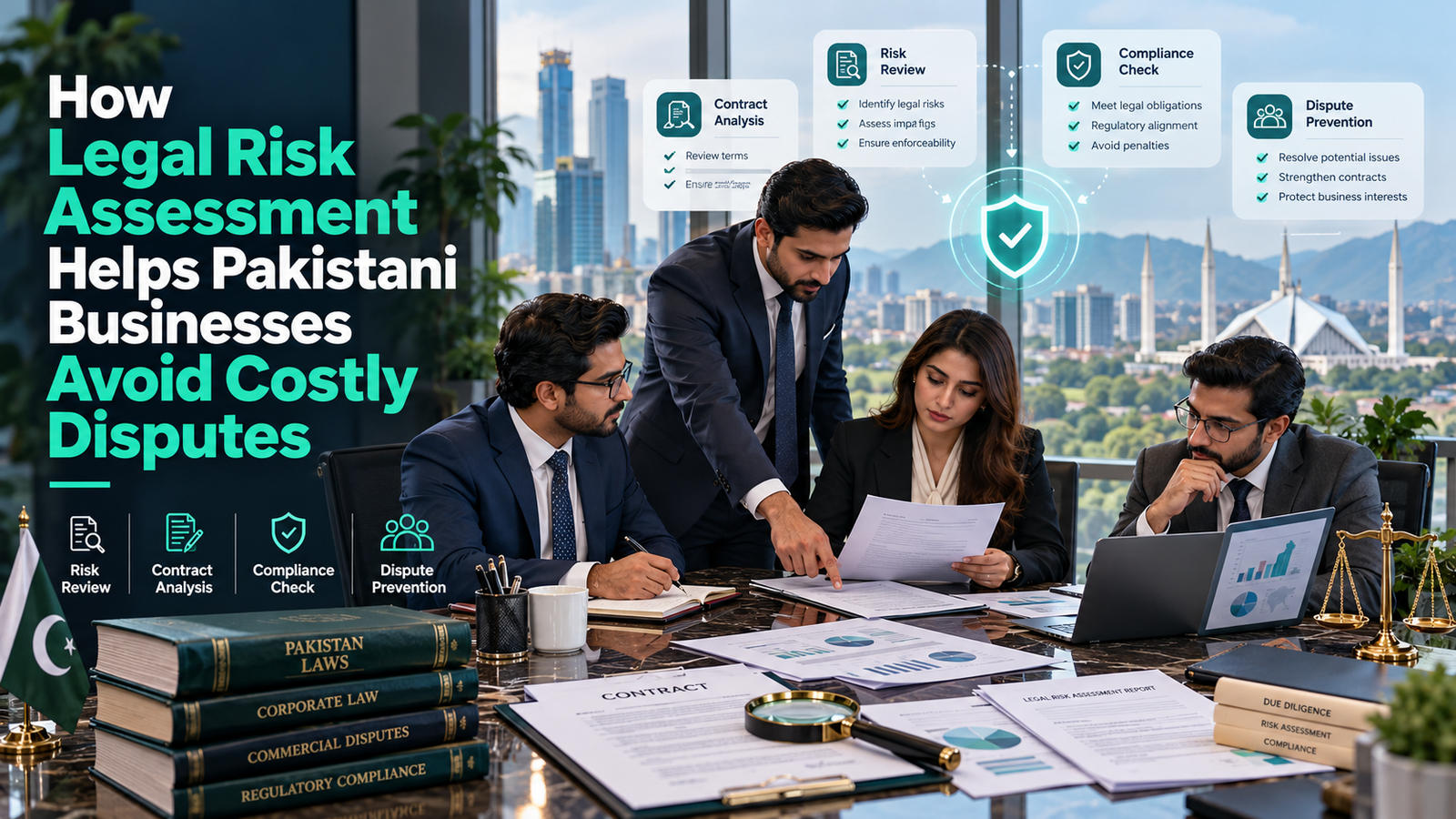
Legal risk assessment pakistan is an essential consideration for entrepreneurs, company directors, investors, and business owners who want to protect their commercial interests. It involves identifying potential legal problems, evaluating their likelihood and impact, and developing practical measures to prevent or control them. Instead of waiting for a legal notice, financial penalty, or courtroom dispute, businesses can establish systems that help them make informed decisions before problems escalate.
With a structured assessment and appropriate professional guidance, businesses can strengthen contracts, improve compliance, protect assets, and build a more reliable foundation for long-term growth.
What Is Legal Risk Assessment?
Legal risk assessment is the process of examining a business’s activities, documents, relationships, and obligations to identify areas where legal difficulties may arise. It considers how applicable laws, contractual commitments, regulatory requirements, and potential disputes could affect the organisation.
For example, a company might discover that its supplier agreements do not clearly establish delivery deadlines or responsibility for defective products. Another business might find that employee contracts lack confidentiality provisions or that corporate records contain inconsistencies requiring correction.
These issues may not cause immediate problems, but they can create uncertainty when disagreements occur.
Professional legal risk assessment services help businesses understand their exposure and determine which issues require immediate attention. The objective is not to eliminate every possible risk. Instead, it is to reduce avoidable exposure, prepare for foreseeable problems, and ensure that significant decisions are made with an understanding of their legal consequences.
Why Pakistani Businesses Need Legal Risk Assessment
Businesses operate within a legal environment that may involve company legislation, tax obligations, employment requirements, property laws, intellectual property protection, contractual responsibilities, and sector-specific regulations.
The requirements applicable to one business may differ from those affecting another. A technology company, manufacturing business, retail operation, and professional services firm can face very different legal challenges.
Business legal risk management Pakistan helps organisations identify which obligations apply to their operations and establish appropriate procedures to meet them.
There are several important reasons to assess legal risks regularly.
First, early identification can prevent avoidable disputes. Clear contracts and documented decisions reduce uncertainty between business partners, customers, employees, and suppliers.
Second, an assessment can reveal compliance gaps before they attract regulatory attention. Businesses can review relevant filings, licences, registrations, and internal records to identify matters requiring correction.
Third, risk assessment supports better financial planning. Litigation, penalties, interrupted operations, and unexpected contractual liabilities can consume resources that would otherwise support business development.
Finally, a documented risk management process can improve confidence among investors, lenders, customers, and commercial partners who expect an organisation to manage its responsibilities professionally.
Major Legal Risks Every Business Should Evaluate
1. Contractual Risks and Poor Documentation
Contracts establish the rights and responsibilities of parties doing business together. When agreements contain unclear language, missing provisions, or unrealistic obligations, misunderstandings can develop into serious disputes.
Relying entirely on verbal promises can create difficulties when the parties later disagree about what was agreed. Written records, properly drafted agreements, and consistent document management provide a clearer basis for resolving disagreements.
Professional contract review services Pakistan can help identify unclear clauses, unfair obligations, missing protections, and provisions that may expose a business to unnecessary liability.
Before signing a major agreement, businesses should understand what they are promising, what the other party must deliver, and what remedies may be available if either party fails to perform.
2. Corporate and Regulatory Compliance Risks
Corporate compliance is another important area of legal risk. Companies may have obligations involving statutory records, annual filings, director decisions, shareholder matters, beneficial ownership information, and other requirements under applicable company law and regulations.
Businesses registered with the Securities and Exchange Commission of Pakistan should identify the filings and governance obligations relevant to their company structure. They should also maintain accurate records of important corporate decisions and ensure that authorised individuals approve transactions appropriately.
Corporate legal compliance Pakistan involves reviewing the company’s legal structure, identifying applicable obligations, maintaining accurate documentation, and monitoring requirements as the business grows.
Companies should also consider their obligations toward the Federal Board of Revenue, provincial authorities, labour departments, and industry-specific regulators where applicable.
A structured regulatory compliance risk assessment can help management identify possible gaps and establish a practical schedule for reviews, renewals, and required filings.
3. Employment and Workplace Legal Risks
Employment matters can create significant exposure when organisations lack written agreements, consistent policies, or reliable personnel records.
Common concerns include unclear job responsibilities, disputed compensation, unpaid employment benefits, inappropriate termination procedures, confidentiality breaches, and disagreements involving working conditions.
Businesses should review employment contracts, workplace policies, payroll documentation, leave records, and applicable employee registrations. They should also assess whether managers understand the procedures required for hiring, performance management, disciplinary action, and termination.
Employment law compliance Pakistan helps employers understand their responsibilities and create clearer relationships with employees.
A professional employment legal risk assessment can identify weaknesses in employment documentation, policies, and internal procedures before they contribute to formal complaints or disputes.
4. Tax and Financial Compliance Risks
Tax-related legal exposure deserves particular attention because errors can affect cash flow, reporting obligations, and the organisation’s relationship with regulatory authorities.
Potential concerns include inaccurate returns, incomplete financial records, missed withholding obligations, sales tax errors, disputed assessments, and inconsistencies between accounting records and regulatory submissions.
Businesses should determine their applicable tax responsibilities and maintain supporting documentation for significant transactions. Where necessary, legal advisers should work with tax professionals and accountants to evaluate the consequences of identified issues.
Tax compliance risk management Pakistan focuses on recognising potential weaknesses in tax processes and helping businesses address them through appropriate review and professional advice.
5. Intellectual Property and Confidential Information
A company’s intellectual property may include its name, logo, software, designs, written content, marketing materials, technical processes, and confidential business information.
Without appropriate protection, a company may experience unauthorised use of its brand, disputes over ownership, misuse of confidential information, or disagreements about work produced by employees and contractors.
Businesses should establish who owns important intellectual property, verify relevant registrations, and review the agreements governing its use. Software houses and digital agencies should pay particular attention to development contracts, third-party licences, confidential information, and rights over deliverables.
Intellectual property legal protection Pakistan involves identifying valuable intangible assets and determining whether the organisation has suitable ownership records, registrations, and contractual protections.
Confidentiality agreements and intellectual property clauses can be useful, but their effectiveness depends on appropriate drafting, practical implementation, and the circumstances of each relationship.
6. Property and Asset Ownership Risks
Property transactions, leases, equipment purchases, and asset transfers can create legal problems when ownership or transfer rights are not properly verified.
A business intending to purchase commercial property should investigate title records, relevant approvals, existing charges, contractual restrictions, and potential disputes. The precise checks will depend on the property’s location, legal status, and ownership arrangements.
For other business assets, organisations should confirm ownership, review financing arrangements, and ensure that the person selling or transferring an asset has the necessary authority.
Property legal due diligence Pakistan helps identify ownership uncertainties, competing claims, incomplete documentation, and potential restrictions before the parties commit significant funds.
Verifying documents before payment is generally more practical than attempting to resolve an ownership dispute after a transaction has been completed.
How to Conduct an Effective Legal Risk Assessment
An effective assessment follows a consistent process rather than relying on assumptions or informal discussions.
Step 1: Identify the Business’s Legal Obligations
Begin by reviewing the company’s structure, industry, locations, employees, contracts, assets, and commercial activities. Determine which legal and regulatory requirements apply to the organisation.
This stage creates a clear starting point and prevents the assessment from becoming a generic checklist that overlooks important industry-specific issues.
Step 2: Collect and Review Documentation
Gather relevant company records, agreements, licences, employment documents, tax records, property documents, internal policies, and information about existing disputes.
The reviewer should examine whether documents are complete, consistent, properly authorised, and current where required. Missing or contradictory information should be investigated rather than automatically treated as evidence of compliance.
Step 3: Evaluate Each Identified Risk
Not every legal issue requires the same response. Evaluate each concern according to its likelihood, potential financial impact, operational consequences, regulatory significance, and effect on the organisation’s reputation.
A minor documentation correction may require routine attention, while a disputed ownership claim or significant regulatory issue could need immediate professional involvement.
Step 4: Develop Practical Risk Controls
Once risks have been identified, determine how to address them. Measures may include revising contracts, correcting records, establishing approval procedures, updating workplace policies, obtaining required advice, or introducing compliance reminders.
Effective legal risk mitigation strategies should specify what needs to change, who is responsible, and when the action should be completed.
Step 5: Monitor and Update the Assessment
Legal risks change as businesses hire employees, introduce new services, enter new markets, sign major contracts, or restructure their operations.
Periodic reviews help management identify changes before they become significant problems. Businesses should also reassess their position after major transactions, regulatory developments, or serious internal incidents.
Common Mistakes That Increase Legal Exposure
Some businesses only seek professional advice after receiving a legal notice or facing a dispute. Others depend on outdated contract templates, fail to maintain complete records, or assume that company registration alone guarantees ongoing compliance.
Another common mistake is treating legal risk as the responsibility of one department. Contracts, employment practices, tax procedures, customer communication, and operational decisions all have potential legal implications.
Proactive legal risk management requires clear responsibilities, reliable records, informed decision-making, and timely professional support.
Social media posts, email exchanges, and messaging conversations can also become relevant evidence in commercial or employment disputes. Business owners should encourage professional communication and ensure that important decisions and contractual changes are properly documented.
Recognising these weaknesses early allows an organisation to improve its procedures without waiting for a costly problem to expose them.
How Professional Legal Consultants Can Help
Professional legal consultants help businesses identify potential exposure, review relevant documents, understand applicable obligations, and develop appropriate responses.
Depending on the matter, support may include contract drafting and review, corporate governance advice, regulatory compliance checks, employment documentation, property verification, intellectual property protection, and dispute prevention.
When a potential problem is identified, advisers can explain the available options, relevant deadlines, and practical consequences of different decisions. Complex matters may also require collaboration with tax specialists, accountants, or other professionals.
Businesses seeking legal risk assessment Pakistan should look for advice that reflects their actual operations, explains risks clearly, and prioritises practical solutions over unnecessary paperwork.
Pakistan’s First Online Consultants (PFOC) provides legal consultancy support aimed at helping businesses strengthen their documentation, understand their legal responsibilities, and address potential problems before they become costly disputes.

 Arabic
 French
 Spanish
 Portuguese
 Deutsch
 Turkish
 Dutch
 Italiano
 Russian
 Romaian
 Portuguese (Brazil)
 Tiếng Việt