
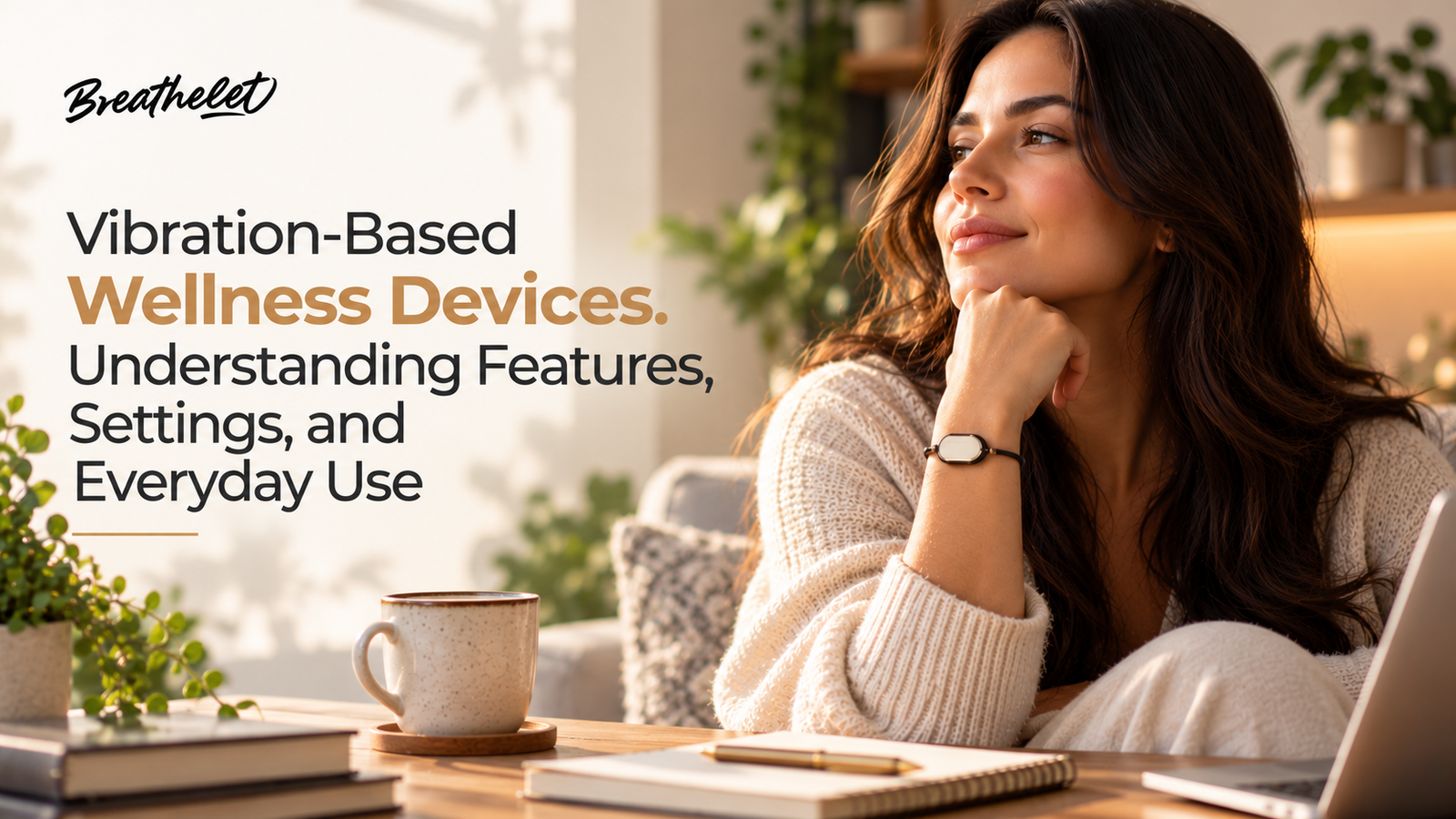
Modern wellness routines are changing. Many people are moving away from complicated systems filled with apps, notifications, and constant tracking, searching instead for simple tools that fit naturally into daily life.
Vibration-based wellness devices are part of this shift. These devices use gentle tactile feedback to create physical reminders throughout the day, helping users pause, reconnect, and build mindful habits without requiring constant attention from a screen.
Understanding how these devices work, what features matter, and how they can be used in everyday routines can help you choose the right wellness tool for your lifestyle.
What Are Vibration-Based Wellness Devices?
Vibration-based wellness devices are wearable or portable tools that use gentle vibrations as physical cues. Instead of relying on visual notifications or sounds, they communicate through touch.
The idea is simple: a small vibration creates a moment of awareness.
A user may receive a subtle reminder to:
-
Take a mindful pause
-
Focus on breathing
-
Reset attention during a busy day
-
Create a healthier daily rhythm
Unlike traditional digital devices that demand attention, vibration-based wellness tools are designed to work quietly in the background.
How Vibration Technology Works
At the core of these devices is a small vibration motor that produces tactile feedback. When activated, the motor creates a gentle movement that the wearer can feel.
The experience is intentionally simple:
-
The device activates at a chosen or randomized interval.
-
The user notices the physical sensation.
-
The vibration becomes a cue for a mindful action.
-
Repeated use helps create awareness around a habit.
This process connects with the psychology of physical cues. Many everyday habits are influenced by reminders in our environment, and a wearable device creates a consistent reminder that stays with the user throughout the day.
Key Features to Consider in Vibration Wellness Devices
Not all vibration-based devices are designed the same way. Different features affect comfort, usability, and how naturally the device fits into your routine.
1. Vibration Pattern and Intensity
The quality of vibration matters.
A wellness device should provide feedback that is noticeable but not disruptive. Strong vibrations may feel distracting, while extremely subtle feedback may go unnoticed.
Important considerations include:
-
Adjustable vibration strength
-
Comfortable tactile feedback
-
Quiet operation
-
Natural feeling reminders
The goal is not to interrupt your day. It is to create a small moment of awareness.
2. Customizable Reminder Settings
Personalization helps a device fit different lifestyles.
Some vibration-based wellness devices allow users to adjust:
-
Reminder frequency
-
Timing intervals
-
Vibration duration
-
Activation preferences
For example, someone working at a desk may prefer regular reminders during working hours, while another person may prefer fewer cues during meditation, travel, or evening routines.
A useful wellness device adapts to the person instead of creating another task to manage.
3. Battery Life and Charging Convenience
A wellness device should support your routine, not interrupt it with frequent charging.
When choosing a device, consider:
-
Battery capacity
-
Charging method
-
Charging time
-
Everyday usability
A longer battery life makes it easier to maintain consistent use, especially for people who wear their device throughout workdays, travel, or outdoor activities.
4. Comfort and Design
Since wellness wearables are designed for regular use, comfort is essential.
Consider:
-
Lightweight construction
-
Adjustable fit
-
Skin-friendly materials
-
Minimal design
A device that feels natural on the wrist is more likely to become part of a daily habit.
Different Ways People Use Vibration-Based Wellness Devices
The value of these devices comes from how they integrate into everyday moments.
During Work and Study
Long periods of concentration can make people lose awareness of their posture, breathing, or stress levels.
A gentle vibration can create a simple reset moment:
-
Relax your shoulders
-
Take a deeper breath
-
Reconnect with your surroundings
-
Return to your task with renewed focus
It acts as a small reminder during busy schedules.
During Morning Routines
Morning habits often shape the rest of the day.
A vibration-based wellness device can become part of a mindful start by creating moments for:
-
Intentional breathing
-
Quiet reflection
-
Setting daily intentions
-
Beginning the day without immediately reaching for a screen
Small moments of awareness can create a calmer transition into daily activities.
During Travel and Commuting
Airports, public transportation, and busy streets can create constant stimulation.
A wearable reminder can help users create personal moments of calm while moving through crowded environments.
Instead of adding another source of information, the device provides a simple physical cue to reconnect with the present moment.
During Evening Wind-Down
Many people struggle to disconnect after a busy day.
A wellness wearable can support an evening routine by reminding users to slow down before:
-
Reading
-
Journaling
-
Meditation
-
Preparing for sleep
The purpose is not to track every action but to encourage intentional pauses.
Vibration-Based Devices vs. Screen-Based Wellness Technology
Many modern wellness products rely on apps, dashboards, and data tracking. While these features can be useful, they can also introduce more screen interaction into daily life.
Vibration-based wellness devices focus on simplicity.
Screen-Based Devices Often Include:
-
App notifications
-
Data dashboards
-
Performance tracking
-
Digital goals
Vibration-Based Wellness Devices Focus On:
-
Physical reminders
-
Simple interactions
-
Reduced distractions
-
Mindful moments
For users looking for a quieter wellness experience, tactile feedback offers a more minimal approach.
Understanding Settings: Finding What Works for You
The best settings depend on personal preference and lifestyle.
A few practical approaches include:
Start With Gentle Reminders
New users may benefit from fewer reminders while building familiarity with the device.
The goal is to create awareness, not dependence on constant alerts.
Match Settings to Your Schedule
Different routines require different approaches.
Examples:
Office Routine
-
Regular daytime reminders
-
Gentle vibration strength
Meditation Practice
-
Fewer interruptions
-
Longer mindful sessions
Travel Routine
-
Flexible reminders
-
Comfortable all-day wear
Adjust Based on Experience
A wellness device should evolve with your routine.
After using it for some time, users can evaluate:
-
Are reminders noticeable?
-
Do they feel natural?
-
Is the device comfortable?
-
Does it support the intended habit?
Small adjustments can improve the overall experience.
The Role of Physical Cues in Building Habits
Many habits are influenced by triggers. A physical cue can serve as a reminder that connects a specific sensation with a desired action.
For example:
Vibration → Pause → Breath → Awareness
Over time, repeated experiences can help create stronger connections between the cue and the behavior.
The device itself does not create mindfulness automatically. Instead, it creates opportunities for users to practice intentional moments throughout the day.
Choosing a Vibration-Based Wellness Device
Before purchasing, consider:
Purpose
Are you looking for breathing reminders, mindfulness support, habit cues, or general wellness awareness?
Simplicity
Does the device add convenience or another complicated system?
Comfort
Can you comfortably wear it throughout your normal activities?
Features
Do the settings match your lifestyle?
Design
Does it fit naturally with your personal style?
A good wellness device should feel like a quiet companion, not another piece of technology demanding attention.
Final Thoughts
Vibration-based wellness devices like Breathelet represent a simpler approach to modern self-care. Instead of adding more information, screens, and notifications, they use a basic human sense: touch.
With thoughtful features, customizable settings, and comfortable designs, these devices can support everyday moments of awareness.
The most effective wellness tools are often the ones that fit naturally into life. A small physical reminder can create space for a pause, a breath, and a moment to reconnect with yourself.

 Arabic
 French
 Spanish
 Portuguese
 Deutsch
 Turkish
 Dutch
Dutch
 Italiano
 Russian
 Romaian
 Portuguese (Brazil)
 Tiếng Việt