
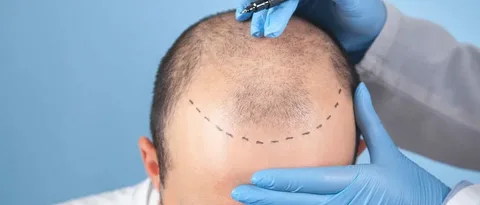
Hair thinning can be frustrating, especially when it gradually changes the appearance of the hairline and scalp. Some people notice reduced density at the front, while others experience thinning around the temples, mid-scalp, or crown. For suitable candidates, DHI hair transplant in Islamabad may provide an option for improving coverage by placing individual hair follicles into areas affected by hair loss.
The success of a hair restoration plan depends on much more than the number of grafts used. Careful assessment, appropriate donor management, natural placement, and realistic expectations all contribute to the overall treatment strategy.
What Is DHI?
DHI stands for Direct Hair Implantation. It is a follicular hair transplantation technique in which individual grafts are extracted from a suitable donor region and implanted into selected recipient areas.
The follicles are placed individually according to the planned direction and angle. This allows the treatment plan to focus on specific areas rather than approaching the scalp as one uniform region.
For people considering hair transplant in islamabad, understanding how DHI differs from other transplantation approaches can help them have a more informed consultation.
Can DHI Improve Visible Hair Density?
Reduced density can make the scalp more visible, particularly under bright lighting or when hair is wet. Transplantation may be considered when suitable donor follicles are available.
Rather than attempting to reproduce every lost follicle, a restoration plan may focus on strategically improving coverage in areas where the change would be most noticeable.
The appropriate density depends on donor availability, existing hair, hair thickness, recipient-area size, and long-term hair-loss considerations.
Why Is Existing Hair Important?
Existing hair can provide valuable coverage and should be considered during treatment planning. Transplanted follicles may be positioned between existing hairs when appropriate.
The relationship between new and existing hair can influence the overall appearance. Matching the direction and angle of surrounding hair can help the transplanted region blend more naturally.
This is particularly relevant when planning a DHI hair transplant in Islamabad for someone who still has considerable existing hair in the recipient area.
Can DHI Address a Receding Hairline?
The frontal hairline is often one of the first areas people notice when hair loss progresses.
A DHI procedure may be considered to restore selected portions of a receding hairline. The design should account for facial proportions and the patient's existing hair pattern.
A natural hairline generally includes subtle irregularities and changes in density. The goal should be a balanced design rather than an artificial-looking straight line.
What About the Temples?
Temple recession can make the forehead appear wider and change the shape of the hairline. Restoring this region requires careful consideration of natural hair direction.
The amount of restoration needed varies considerably between individuals. Some people may require limited reinforcement, while others may have more extensive recession.
A consultation can determine whether the temples can reasonably be included in the treatment plan.
Can DHI Be Used for the Crown?
Crown thinning can be more complex because hair naturally grows in a swirling pattern in this region.
A restoration plan needs to consider the direction of surrounding follicles and the size of the thinning area. Donor availability can also determine how much coverage may be possible.
Not every patient requires the same approach to crown restoration, making individual assessment essential.
Why Does Donor Management Matter?
The donor area provides the follicles used during transplantation. Since the supply is limited, careful planning is important.
A donor assessment can consider density, hair thickness, follicular characteristics, and the amount of scalp that may eventually require coverage.
For anyone researching hair transplant in islamabad, preserving donor resources can be an important part of long-term planning.
What Role Does Dr Adnan Bashir Have?
Choosing the professional responsible for evaluating and planning hair restoration is an important consideration. dr adnan bashir is associated with hair restoration services at Enfield Royal Clinic Islamabad.
During consultation, dr adnan bashir can discuss the individual's hair-loss pattern, donor characteristics, restoration goals, and possible treatment approaches.
Because every patient's situation is different, treatment decisions should be based on an individual assessment rather than a generic recommendation.
Exploring Enfield Royal Clinic in Islamabad
Patients researching hair restoration services may consider enfield royal clinic in islamabad when exploring local treatment options.
The hair restoration journey can involve several stages, including consultation, donor assessment, hairline planning, follicular extraction, implantation, recovery instructions, and follow-up.
For those considering DHI hair transplant in Islamabad, understanding the entire process can help them approach treatment with realistic expectations.
What Is the Recovery Period Like?
After transplantation, temporary redness, swelling, sensitivity, and small crusts may appear around the treated areas. Recovery can vary from one patient to another.
Specific aftercare instructions should be followed carefully. Patients may receive guidance about scalp washing, physical activity, sleeping positions, and protecting the newly treated area.
The scalp needs time to recover, so the appearance immediately after treatment should not be considered the final outcome.
How Does New Hair Develop?
Hair restoration takes place gradually. Some transplanted hairs can shed during an early stage before new growth begins.
New hair may initially appear fine before gradually becoming more mature. The timing and degree of visible development vary according to individual biological factors.
Genetics, donor characteristics, existing hair, healing, and ongoing natural hair loss can all influence the eventual appearance.
Consequently, patients considering hair transplant in islamabad should be prepared for a gradual transformation rather than an immediate change.
Who May Be a Candidate?
DHI may be considered for individuals with suitable donor follicles and a hair-loss pattern that can reasonably be addressed through transplantation.
Factors such as the cause of hair loss, donor density, recipient-area condition, existing hair, and long-term expectations should be evaluated before treatment.
A professional consultation can help determine whether DHI is appropriate or whether another hair restoration approach may be more suitable.
Final Thoughts
Restoring hair density requires careful consideration of where follicles are needed and how they should integrate with existing growth. DHI hair transplant in Islamabad offers an individual follicle implantation technique that may be suitable for selected candidates.

 Arabic
 French
 Spanish
 Portuguese
 Deutsch
 Turkish
 Dutch
Dutch
 Italiano
 Russian
 Romaian
 Portuguese (Brazil)
 Tiếng Việt