
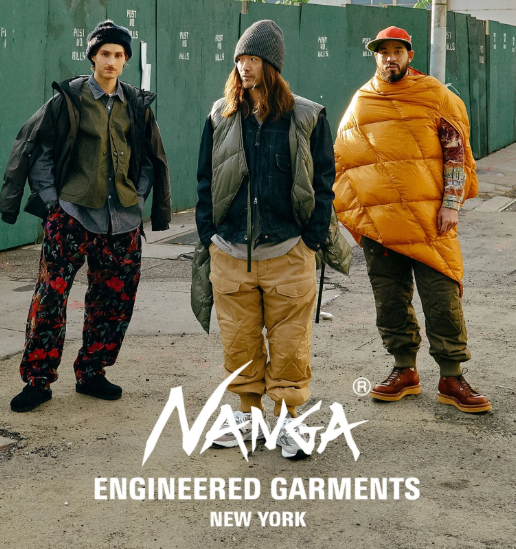
Engineered Garments Clothing has made a name for itself by bringing American workwear, military uniforms, outdoor clothing, sportswear, and traditional menswear into one distinctive style. The label comes from New York, while its design direction reflects Japanese attention to clothing details and proportion. This mix gives each garment a familiar base with an unexpected finish. Utility pockets, relaxed cuts, layered panels, textured fabrics, and vintage references appear throughout the collections. The result suits men who want clothing with character without relying on large logos or loud graphics. Engineered Garments has also had a lasting effect on casual menswear by showing how old clothing ideas can work with modern wardrobes.
The Story of Engineered Garments
Engineered Garments was founded in New York by Japanese designer Daiki Suzuki through Nepenthes. Suzuki had a deep interest in American clothing, especially pieces linked to military life, work, outdoor activities, and classic tailoring. These references became the starting point for the label's collections. Old garments were studied for their shape, pockets, stitching, fabrics, and practical purpose before being reworked for present-day dressing. This approach helped give Engineered Garments its own visual language. The New York setting also gave the label a relaxed city character that works well with denim, casual shirts, boots, sneakers, and other everyday menswear.
What Makes Engineered Garments Different?
Engineered Garments US stands out through details that can be easy to miss at first glance. A jacket may feature several pockets in different positions, while a shirt may borrow details from an old military uniform. Roomy cuts make many pieces comfortable for layering, while fabric choices add texture to simple outfits. Olive, army green, navy, black, khaki, and white are common colour choices, making the clothes easy to mix. Seasonal prints bring a stronger visual touch to selected pieces. Bedford Jackets, Loiter Jackets, Andover Jackets, Field Vests, Fatigue Pants, Work Shirts, and 19th Century BD Shirts all show the range of American clothing references used by the label.
Engineered Garments Jackets for Layered Outfits
Engineered Garments Jackets can form the main part of an outfit while working with simple pieces underneath. A Bedford Jacket looks natural with a plain T-shirt, denim, and casual shoes. It can also be worn over an Oxford shirt with relaxed trousers for a cleaner menswear look. Field-style jackets pair well with Fatigue Pants, boots, or canvas sneakers for a workwear-inspired outfit. During colder months, a knit sweater or vest beneath the jacket adds warmth and creates a layered appearance. Olive, navy, black, and khaki are easy choices for regular wear, while printed styles can give a simple outfit a stronger visual character.
Engineered Garments Shirts for Everyday Style
Engineered Garments Shirts bring workwear and military references into casual dressing. An Oxford button-down works well with denim, chinos, or fatigue trousers, while a printed shirt can become the main feature of an outfit. White, navy, and muted shades are useful when the trousers or jacket already have several details. Many shirts have relaxed proportions, so wearing them untucked can create an easy appearance. A tucked shirt works nicely with higher-rise trousers and a leather belt when a more traditional menswear feel is wanted. Boots, leather shoes, and canvas sneakers all pair naturally with these shirts.
Engineered Garments Pants for Relaxed Dressing
Engineered Garments Pants offer relaxed shapes with clear links to military and workwear clothing. Fatigue Pants are among the label's familiar designs, taking inspiration from classic military trousers. Olive and army green versions work well with white shirts, navy jackets, grey knitwear, and plain T-shirts. Black and khaki options give men more room to build simple outfits. Roomier trousers can balance shorter jackets and create a well-proportioned outfit. They also work nicely with tucked shirts, casual outerwear, and simple footwear, making them useful across many casual settings.
Easy Ways to Style Engineered Garments
A strong Engineered Garments outfit does not require several pieces from the same label. Start with one garment that has interesting details, then keep the rest of the clothing simple. A Bedford Jacket can be worn with a plain T-shirt and denim, while Fatigue Pants can be matched with an Oxford shirt and leather shoes. Layering works well when the colours stay close to one another. Olive, navy, black, cream, white, and grey are easy combinations. Mixing cotton, canvas, wool, and denim can also add texture. Simple boots or sneakers help keep the outfit relaxed while letting the clothing remain the main focus.
How to Buy Authentic Engineered Garments Clothing
When buying Engineered Garments Clothing, check the retailer, product name, garment measurements, fabric details, photographs, and return terms. Product photos should show labels, buttons, stitching, pockets, and other useful details. Sizing deserves attention because many pieces have loose or roomy proportions. Compare the listed measurements with a jacket, shirt, or pair of trousers that already fits well. Buyers looking at older collections should also check the exact model and season, since measurements and fabrics can change between releases. Clear product information and a reliable return policy make online shopping much easier.
Engineered Garments and Its Influence on Menswear
Engineered Garments has helped make military and workwear references feel natural within modern casual dressing. Field jackets, fatigue trousers, work shirts, vests, and outdoor-inspired garments can now be paired with simple city clothing without looking like uniforms. The label's relaxed cuts also suit the way many men dress today, with comfort and layering playing a large part in daily outfits. Its approach shows that heritage clothing can have a place in contemporary wardrobes while still keeping links to the garments that inspired it.
FAQs About Engineered Garments
What is Engineered Garments known for?
Engineered Garments is known for Japanese-designed menswear influenced by American workwear, military clothing, outdoor gear, sportswear, and traditional tailoring.
Does Engineered Garments have a loose fit?
Many pieces use relaxed or roomy proportions, but the fit can change from one style to another. Checking garment measurements before buying is helpful.
What are popular Engineered Garments pieces?
Popular styles include Bedford Jackets, Loiter Jackets, Fatigue Pants, Field Vests, Work Shirts, and 19th Century BD Shirts.
How should I style Engineered Garments Jackets?
Pair them with plain T-shirts, Oxford shirts, denim, Fatigue Pants, or relaxed trousers. Boots and simple sneakers both work well.
What can I wear with Engineered Garments Pants?
Engineered Garments Pants pair well with button-down shirts, T-shirts, knitwear, boots, sneakers, vests, and casual jackets.
The Appeal of Engineered Garments Clothing Today
Engineered Garments Clothing brings American clothing history, Japanese design, and relaxed New York dressing into a style that feels right for modern menswear. Its jackets, shirts, pants, vests, and outer layers give classic garments a fresh character while keeping comfort and personal style at the center. A Bedford Jacket, pair of Fatigue Pants, or simple work shirt can become the starting point for many outfits. That mix of heritage references, relaxed proportions, useful details, and easy layering keeps Engineered Garments relevant for men who want more character from everyday clothing.

 Arabic
 French
 Spanish
 Portuguese
 Deutsch
 Turkish
 Dutch
Dutch
 Italiano
 Russian
 Romaian
 Portuguese (Brazil)
 Tiếng Việt