
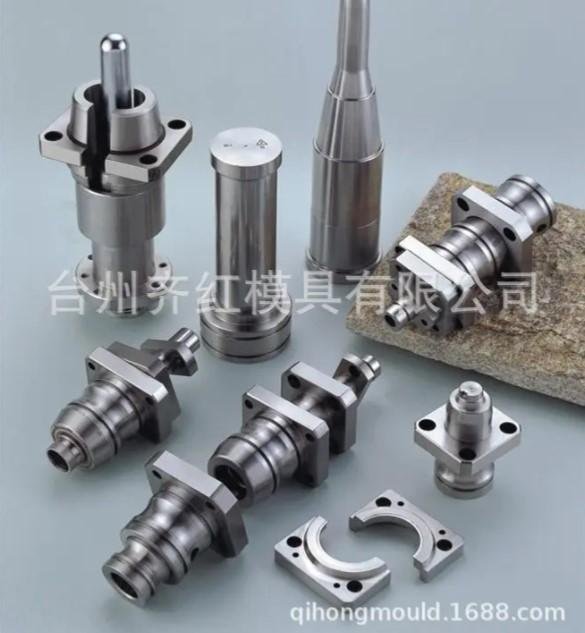
For manufacturers developing plastic packaging, working with a reliable Bottle Blowing Mould Factory can make the move from a bottle idea to actual production much smoother. A capable Bottle Blowing Mould Factory should be able to consider bottle geometry, preform behavior, cavity layout, cooling, and equipment compatibility together rather than treating the mould as an isolated component. This matters when manufacturers need bottles that look consistent while also fitting their intended production process and market application.
Designing Around the Final Bottle
A blowing mould is closely connected to the shape of the finished container. Once a heated preform enters the mould, compressed air expands the plastic against the cavity walls, creating the final bottle profile. The cavity therefore needs to reflect important details such as curves, shoulders, base structures, neck dimensions, and surface features.
Different packaging projects can call for very different designs. A simple water bottle may have straightforward geometry, while cosmetic or pharmaceutical packaging may require more distinctive shapes. Building the mould around the finished product from the beginning can help avoid unnecessary changes later in the project.
Qhpreformmould for Different Packaging Needs
Bottle blowing moulds are used across a wide range of packaging applications. The product range available from Qhpreformmould includes water and beverage bottle moulds, cosmetic bottle moulds, medicine bottle moulds, and five-gallon bottle moulds. These applications show how one mould category can serve very different product requirements.
Customization is also useful when standard bottle dimensions do not match a customer's product. Cavity numbers and mould configurations can be developed according to individual requirements, giving manufacturers more freedom when planning their production lines.
Getting the Cavity and Structure Right
Cavity design has a direct relationship with production planning. A single-cavity mould may suit a particular project, while multi-cavity options can allow several containers to be formed during one production cycle. The appropriate arrangement depends on the bottle design, machine capabilities, expected workflow, and production goals.
The mould structure itself also deserves attention. Available configurations can include common, self-lock, and needle-valve structures. Different structures can be considered according to the machine and application, making early technical communication an important part of mould development.
Materials and Production Details
The working environment inside a blowing mould places demands on the mould material. Product information from the manufacturer lists materials including P20, 718, H13, S136, and other steel options. The appropriate choice depends on the project and desired production characteristics.
Manufacturing accuracy matters just as much as material selection. Processes such as CNC milling, precision carving, grinding, wire cutting, and other machining operations are used in mould production. Careful processing can help different mould components fit together properly and support repeatable bottle forming.
Building a Mould for Everyday Production
A mould needs to work well beyond the first trial. Operators need practical opening and closing, straightforward cleaning, and reasonable access for inspection when maintenance is required. These everyday details can have a noticeable effect on how convenient the production line is to operate.
For manufacturers planning new bottles or updating existing packaging, it is useful to discuss the entire project before mould production begins. Bottle drawings, material, machine information, cavity requirements, and expected applications can all help shape a more suitable solution. Manufacturers looking for customized bottle mould options can learn more through Taizhou Qihong Mold Co., Ltd..

 English
 Arabic
 French
 Spanish
 Portuguese
 Deutsch
 Turkish
 Dutch
Dutch
 Italiano
 Russian
 Romaian
 Portuguese (Brazil)