
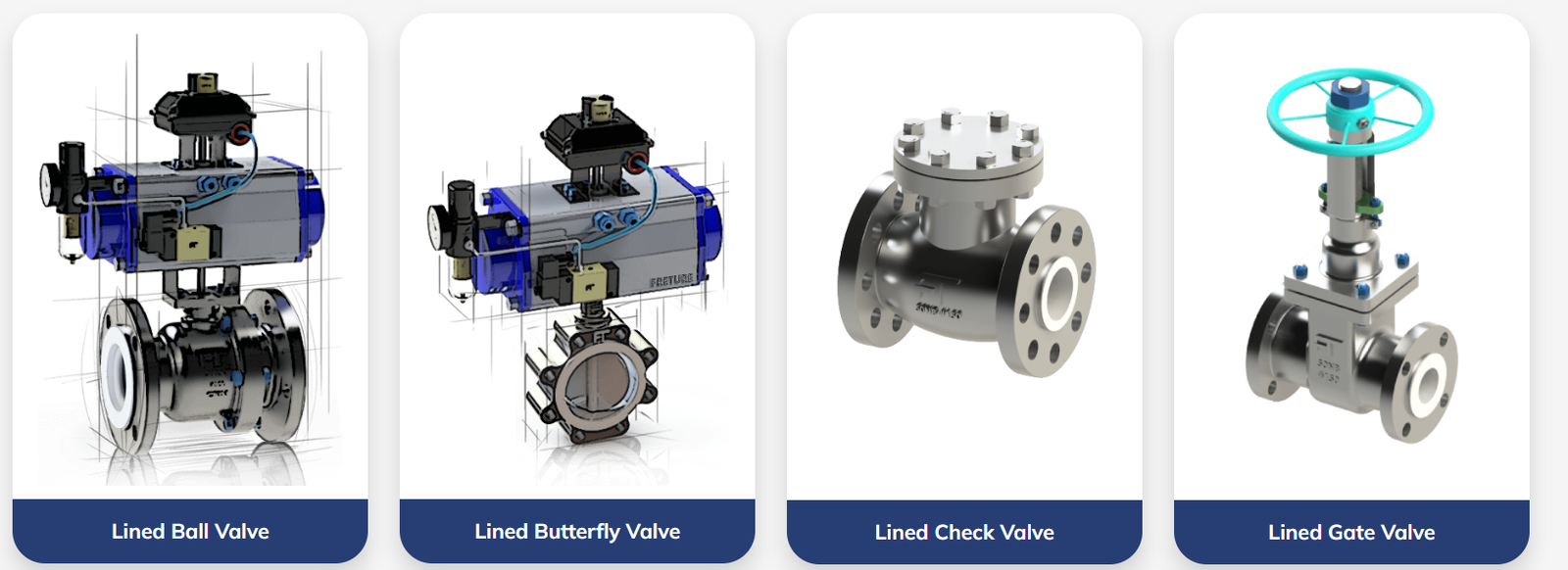
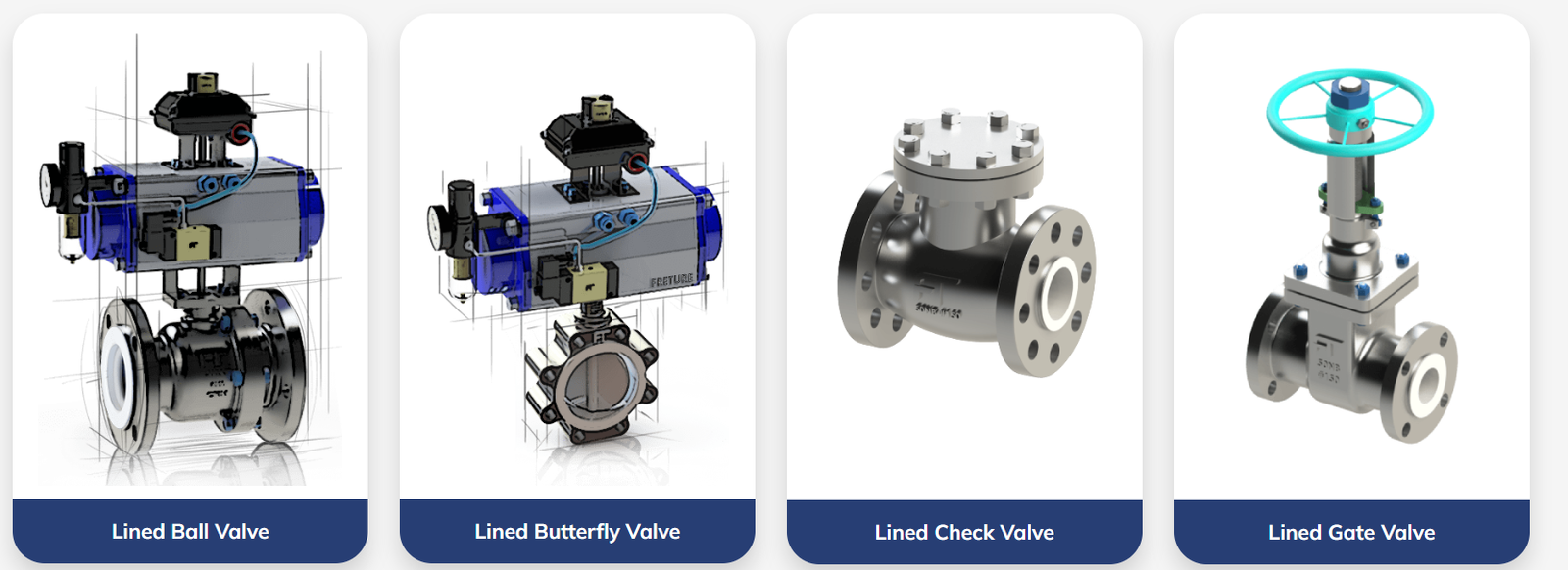
A pulp and paper mill runs on chemistry as much as it runs on fiber. Chlorine dioxide bleaches the pulp, caustic soda washes it, sulfuric acid and sodium chlorate feed the bleach generation plant, and black liquor carries dissolved lignin back to the recovery boiler. Every one of these streams is corrosive enough to attack an unprotected valve body within months. Lined valves — carbon steel or ductile iron bodies fitted with a PTFE, PFA, or rubber lining — are how mills keep these lines in service without replacing valves every shutdown.
This article covers where lined valves are installed across a pulp and paper mill, what happens when the lining fails, and how to choose the right valve type and lining material for each service.
Why Pulp & Paper Processing Needs Lined Valves
Standard steel or cast iron valve bodies corrode quickly in chlorine dioxide, chlorine, hot caustic, and dilute acid service. Corrosion doesn't just threaten the valve — it introduces dissolved iron and other metal ions into the pulp stream. In bleaching, trace metal contamination catalyzes peroxide decomposition and causes brightness reversion, so a corroding valve can quietly cost the mill product quality long before it leaks. Lining the wetted parts with a chemically inert polymer or rubber compound keeps the process fluid from ever contacting base metal, protecting both the valve and the fiber it touches.
Where Lined Valves Are Installed in a Pulp and Paper Mill
Chlorine Dioxide (ClO2) Generation and Dosing
Chlorine dioxide is generated on-site and dosed directly into the bleach plant. It is reactive with many common metals and decomposes violently if it contacts certain contaminants, so dosing and transfer valves are almost always PTFE or PFA lined. These valves see frequent cycling for dose control, so the lining also has to tolerate repeated actuation without abrading at the seat.
Bleach Plant Stage Switching
A bleach plant runs pulp through a sequence of stages — chlorine dioxide, extraction with oxygen and peroxide, and further ClO2 or peroxide stages. Lined butterfly and ball valves handle the larger-diameter transfer and stage-switching lines between washers, routing pulp slurry and bleaching chemical through each stage without exposing the swing pipework to corrosive attack.
Caustic Soda Dosing and Pulp Washing
Sodium hydroxide is used for extraction stages and for pH adjustment ahead of washing. Hot concentrated caustic attacks unlined steel through stress corrosion cracking as much as general corrosion, so dosing and wash-line valves need a lining rated for both the chemical concentration and the operating temperature — PFA is generally preferred over PTFE here for its better performance at sustained high temperature.
Black Liquor Recovery and Evaporation
Black liquor carries dissolved lignin, cooking chemicals, and suspended solids from the digester through evaporation to the recovery boiler. It's caustic and erosive at the same time, which pushes valve selection toward rubber-lined butterfly valves or PTFE-lined plug valves that can take abrasive wear from suspended solids without losing chemical resistance.
Acid Chemical Preparation
The chlorine dioxide generation plant consumes sulfuric acid and sodium chlorate (or methanol, depending on the generation process). These feed lines run concentrated acid at elevated temperature, and a lining breach here is both a corrosion and a personnel safety event, since the leaking fluid is hazardous on contact.
What Happens When a Valve Lining Fails
A lining failure rarely announces itself immediately. Early signs are usually a slow weep at the body-bonnet joint or a drop in dosing accuracy as the seat profile erodes. Left unaddressed, the sequence is predictable: the corrosive fluid reaches base metal, localized pitting starts at the point of first contact, and the valve body thins until it leaks under process pressure. In a ClO2 or acid line, that leak is a safety incident requiring immediate isolation and area evacuation. In a caustic or black liquor line, dissolved metal ions carried downstream affect bleaching efficiency and pulp brightness before the leak itself is even visible. Either way, the mill loses the run — either to an emergency shutdown or to a quality claim traced back weeks later to a corroding valve nobody had flagged for inspection.
Lined Valve Types Used Across the Mill
| Location / Service | Valve Type | Why This Type |
|---|---|---|
| ClO2 generation & dosing | PTFE or PFA-lined diaphragm or ball valve | Precise dosing control with bubble-tight shutoff on a reactive fluid |
| Bleach plant stage switching | PTFE-lined butterfly valve | Quarter-turn operation suited to large-diameter transfer lines |
| Caustic dosing & pulp washing | PFA-lined ball valve | Holds up under sustained high-temperature caustic exposure |
| Black liquor recovery lines | Rubber-lined butterfly valve or PTFE-lined plug valve | Resists erosion from suspended solids alongside chemical attack |
| Acid chemical preparation (H2SO4, sodium chlorate) | PTFE-lined ball or plug valve | Full-port, bubble-tight isolation on concentrated acid |
Choosing the Right Lining Material
| Lining Material | Chemical Compatibility | Practical Temperature Limit | Best Suited For |
|---|---|---|---|
| PTFE | Broad resistance including ClO2, caustic, most mineral acids | ~150°C | General chemical dosing and transfer lines |
| PFA | Similar range to PTFE, better permeation resistance | ~180-200°C | High-temperature caustic and continuous dosing duty |
| Rubber (natural / EPDM) | Strong against abrasive slurries; moderate chemical range | ~80-90°C | Black liquor and fiber-laden lines prone to erosion |
| FEP | Good chemical resistance, transparent | ~150°C | Lines needing visual confirmation of dosing flow |
PTFE and PFA cover most of the mill's chemical-resistance needs; the deciding factor between them is almost always operating temperature. Rubber linings are chosen for erosion resistance where the fluid itself is only moderately corrosive but carries abrasive solids, which is exactly the profile of black liquor.
Installation and Maintenance Considerations
Pulp and paper service adds two wear mechanisms that pure chemical-resistance tables don't capture. First, fiber and fines in the process stream can pack around a valve seat during idle periods, so butterfly and ball valves in intermittent service benefit from a full-bore or minimal-cavity design that doesn't trap slurry. Second, bleach plant valves cycle frequently as stages switch, and repeated actuation is what actually wears through a thin lining at the seat — not the chemical exposure alone. Mills that track lining life by cycle count, not just calendar time, catch seat wear before it becomes a leak.
Frequently Asked Questions
What is a lined valve and why is it used in pulp and paper mills? A lined valve has a metal body — typically carbon steel or ductile iron — fitted with a chemically inert lining such as PTFE, PFA, or rubber on all wetted surfaces. In pulp and paper mills, it's used wherever chlorine dioxide, caustic soda, or acid chemicals would otherwise corrode an unlined valve body and contaminate the pulp stream with dissolved metal.
Which valve type is best for chlorine dioxide (ClO2) service? PTFE lined ball and diaphragm valves are the standard choice for ClO2 generation and dosing, since they combine full chemical resistance with the tight, repeatable shutoff that dosing control requires.
Can rubber-lined valves handle black liquor? Yes — rubber-lined butterfly valves are common in black liquor service because black liquor's suspended solids cause erosive wear that rubber resists well, alongside its moderate causticity. PTFE-lined plug valves are the alternative where higher temperatures rule out rubber.
How often should lined valve linings be inspected in a bleach plant? There's no single fixed interval, since wear depends more on actuation frequency than time in service. Mills typically inspect at each planned shutdown and add cycle-count-based checks for valves in frequent stage-switching duty, since seat wear from repeated actuation is usually the limiting factor.
What causes premature lining failure in pulp and paper chemical lines? The two most common causes are a lining/chemical mismatch — for example, using a rubber lining rated for lower temperatures in a hot caustic line — and mechanical wear from suspended fiber and solids abrading the seat faster than the chemical exposure alone would.

 English
 Arabic
 French
 Spanish
 Portuguese
 Deutsch
 Turkish
 Dutch
Dutch
 Italiano
 Russian
 Portuguese (Brazil)
 Tiếng Việt