
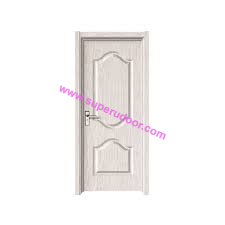
When choosing an interior door, appearance is only one part of the decision. The materials hidden beneath the surface influence stability, handling, finishing, maintenance, and suitability for different rooms. A PVC MDF Door brings together an engineered wood core and a protective PVC layer, creating a construction that balances structure with decorative flexibility. Superudoor, the door brand of Zhejiang Shangpin Bense Home Furnishing Co., Ltd., focuses on interior door manufacturing and provides several material combinations for residential and commercial projects. So, what materials actually go into this type of door?
The central component is MDF, or medium-density fiberboard. Unlike natural timber, MDF is produced from processed wood fibers combined with binding agents and compressed under controlled heat and pressure. This manufacturing method creates a relatively uniform panel with a smooth face, making it suitable for machining, shaping, drilling, and surface covering. Within an interior door, the MDF core provides the main body of the panel and creates a consistent foundation for the decorative exterior.
MDF is particularly useful when a project requires repeatable dimensions and a clean surface. Natural wood contains grain variations and can respond differently to changes in humidity, while engineered fiberboard has a more consistent internal structure. This characteristic supports manufacturing processes where panels need to maintain controlled dimensions during cutting and assembly. The core can also be prepared with different internal filling arrangements according to the required weight, rigidity, handling characteristics, and project specification.
PVC forms the visible protective layer on many models. Polyvinyl chloride can be processed into a thin film or decorative covering and applied over the prepared MDF surface. Its role is not simply decorative. The outer layer can provide resistance against ordinary surface contact, moisture exposure, dust, and stains while giving manufacturers considerable freedom in appearance. Depending on the selected finish, the surface can present a smooth color, textured appearance, or wood-inspired pattern.
The bonding material between the core and outer covering is another important element. Adhesive needs to create a stable connection between dissimilar materials while supporting the expected conditions of indoor use. Proper surface preparation, controlled application, pressure, and curing all influence the quality of the bond. If these stages are handled carefully, the decorative layer can remain closely attached to the panel during regular opening, closing, cleaning, and handling.
Edge treatment deserves particular attention because the perimeter of a panel can be exposed to contact and environmental conditions. PVC edging or other suitable sealing materials may be incorporated around vulnerable areas to provide additional protection. This becomes especially relevant in rooms where humidity changes frequently. A well-finished edge can also contribute to the visual continuity of the complete door, allowing the front surface, side profile, and surrounding frame to appear coordinated.
The internal filling can vary according to the intended product structure. Depending on the project, manufacturers may consider MDF strips, solid wood, plywood, honeycomb paper, chipboard, or foam board. Each option changes the internal characteristics of the finished panel, including weight, rigidity, handling, and support. Superudoor's product information lists several filling possibilities for its PVC MDF interior doors, allowing buyers to discuss a suitable configuration rather than treating every door as having an identical internal structure. (superudoor.com)
Additional reinforcement may also be included in selected areas. Door hardware places concentrated loads around hinges, handles, and locking positions, so internal support can be arranged where necessary. The exact construction depends on the door design and hardware specification. This illustrates why material selection should be considered as a complete system instead of judging the outer PVC surface independently from the core and internal components.
The surface finish creates another layer of design possibilities. Different colors, textures, patterns, and decorative treatments can be selected according to interior style. A residential project may require a calm wood-grain appearance, while an office or hospitality space may call for a simple contemporary finish. Superudoor states that its PVC MDF range includes various pattern designs and customizable colors, giving project buyers flexibility when coordinating doors with floors, walls, cabinets, and furniture. (superudoor.com)
Hardware is not normally considered part of the MDF and PVC material structure, yet it remains closely connected with the final door assembly. Hinges, handles, locks, frames, and other accessories must correspond with the panel thickness and internal construction. Their compatibility affects installation, movement, and everyday operation. For large projects, coordinating these components during the planning stage can reduce adjustments during installation.
Manufacturing quality also depends on how each material is processed. Cutting accuracy influences panel dimensions, surface preparation affects bonding, forming determines edge quality, and inspection helps identify defects before packing. A manufacturer with integrated production capabilities can coordinate these stages within one workflow. Zhejiang Shangpin Bense Home Furnishing Co., Ltd. describes itself as an interior door manufacturer involved in research and development, production, sales, and service, while also accepting OEM and ODM projects. Its factory information includes a range of door categories alongside customized manufacturing capabilities. (superudoor.com)
For buyers, understanding the material structure can make product communication much clearer. Instead of asking only about color or style, a project team can discuss the MDF grade, PVC surface, adhesive system, filling choice, edge treatment, reinforcement, hardware compatibility, and packaging requirements. This approach helps connect the finished appearance with the physical construction behind it.
A carefully selected combination of materials gives an interior door its character from the inside out. MDF establishes the foundation, PVC creates the protective and decorative face, adhesives connect the layers, edge materials help protect vulnerable areas, and internal filling or reinforcement can be adjusted according to application. Businesses interested in exploring available models and customization options can visit https://www.superudoor.com/product in the middle of their product research process, where Superudoor presents PVC MDF doors alongside other interior door solutions from Shangpin. Could understanding these individual materials help you select a door structure that fits your next interior project?

 English
 Arabic
 French
 Spanish
 Portuguese
 Deutsch
 Turkish
 Dutch
Dutch
 Italiano
 Russian
 Portuguese (Brazil)
 Tiếng Việt