
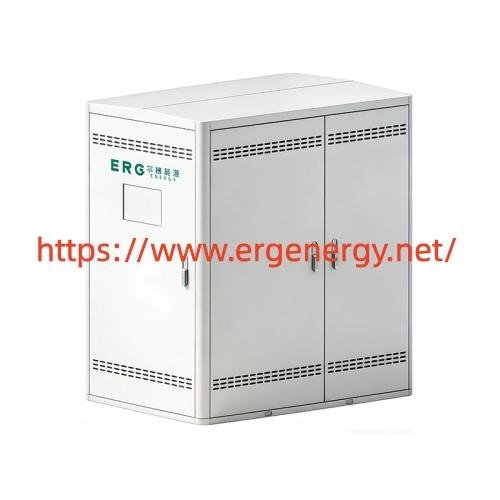
Bulk Vanadium Electrolyte For Energy Storage is an important purchasing consideration when a flow battery project moves from planning toward implementation. Large installations can require substantial quantities of active liquid material, so buyers need to look beyond the quoted price. Concentration, purity, chemical stability, batch consistency, packaging, transportation, and technical documentation all deserve attention. Recent research also highlights the relationship between impurity levels, liquid stability, reaction behavior, and long term operation.
One of the first points to review is composition. The concentration of active ions affects the usable capacity of a flow battery, while the supporting acid environment influences conductivity and chemical behavior. Buyers should request a clear specification sheet that identifies relevant chemical parameters rather than relying only on a general product description.
Purity deserves similar attention. Trace elements can enter during raw material processing, preparation, equipment contact, or other production stages. Their influence can vary depending on the substance and concentration. Buyers can ask suppliers to provide documented impurity limits, analytical methods, and quality inspection records. This creates a clearer basis for comparing different batches and understanding material suitability.
Consistency between batches is another practical issue. A large project may receive several shipments over an extended delivery period. If composition changes noticeably between batches, additional testing or adjustment may become necessary during commissioning. A manufacturer with defined production procedures, sampling methods, and laboratory controls can help create a more predictable procurement process. Buyers should ask how each batch is tested and whether inspection records can accompany shipment documents.
Temperature behavior should also be discussed before an order is finalized. Different ionic forms can have different stability characteristics, and temperature may influence solubility and precipitation behavior. This matters during production, warehouse handling, transportation, and commissioning. Buyers should consider expected storage temperatures and transportation conditions together with the technical specification.
Packaging and logistics can easily be overlooked during technical discussions. Large quantities require suitable containers, secure sealing, clear identification, and transportation arrangements that match the material characteristics. Delivery schedules should also align with project construction and commissioning plans. A supplier that can coordinate production and shipment planning may help reduce interruptions caused by material arriving too early or too late.
Another useful checkpoint is compatibility with the intended flow battery design. The liquid medium works together with membranes, electrodes, pumps, tanks, piping, sensors, and control equipment. Its composition therefore needs to correspond with the requirements of the complete installation. Buyers should communicate the project specifications with the supplier before confirming an order, particularly when the project has specific operating conditions or system requirements.
Cost should be evaluated across the entire purchasing process rather than through unit price alone. Material concentration, usable capacity, transportation distance, inspection requirements, packaging, delivery frequency, and possible preparation work can all influence project expenditure. For large installations, procurement planning can therefore have an important role in managing the overall project budget.
Technical communication also matters when working with a manufacturer. Buyers may need assistance with specification confirmation, sample evaluation, quality documentation, delivery planning, and project specific requirements. Ergenergy focuses on supplying materials and technical solutions around practical project conditions, helping customers assess composition, quality controls, logistics, and application requirements before production and shipment.
For procurement teams preparing a flow battery project, a clear checklist can make supplier comparison easier. Reviewing composition, impurity limits, batch testing, temperature conditions, packaging, logistics, documentation, and system compatibility gives buyers a practical basis for making decisions. Project teams interested in discussing suitable material solutions with Ergenergy can visit https://www.ergenergy.net/ and review the company product capabilities and application direction.

 Arabic
 French
 Spanish
 Portuguese
 Deutsch
 Turkish
 Dutch
Dutch
 Italiano
 Russian
 Romaian
 Portuguese (Brazil)
 Tiếng Việt