
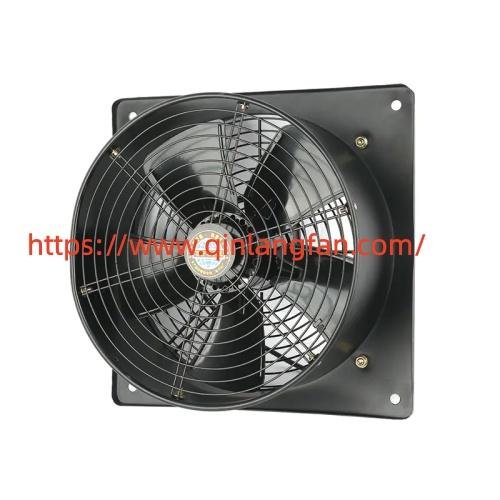
Multi Stage Centrifugal Fan selection becomes particularly important when an industrial system has significant resistance and still needs a steady volume of air. Ductwork, filters, dampers, heat exchangers, process equipment, and long air paths can all add pressure loss. In these situations, buyers should look beyond the basic airflow figure and examine the relationship between pressure, stage arrangement, motor capacity, impeller design, operating conditions, and system layout. Current engineering guidance also recommends matching the equipment performance curve with the actual system resistance rather than selecting by free air volume alone.
The first feature to review is pressure capability. A high pressure application is not defined simply by a large number on a specification sheet. The required pressure depends on the complete air path. Every elbow, filter, duct section, outlet, and process component can contribute resistance. Buyers should calculate or obtain the expected system loss and then compare it with the working point of the proposed equipment. This gives a much more realistic picture of what the unit will need to handle after installation.
Stage arrangement is another point worth discussing. A multistage structure can provide pressure development for applications where air must overcome substantial resistance. The number of stages should be connected to the actual duty rather than selected simply because a project is described as high pressure. Air volume, pressure requirement, speed, medium, temperature, and operating schedule all influence the appropriate configuration. A manufacturer that asks about these conditions before suggesting a model is usually starting the conversation from the application rather than the catalog.
The impeller deserves close attention as well. Blade geometry affects how air enters, accelerates, and leaves the rotating assembly. Poor inlet conditions can create uneven loading, vibration, noise, and performance changes. A suitable inlet arrangement helps air reach the impeller in a more controlled way. Industry guidance also identifies inlet design and balanced airflow as important considerations when evaluating centrifugal equipment.
Motor selection should be considered at the same time. The required power depends on airflow, pressure, air density, speed, and operating conditions. Buyers should provide the working voltage and frequency, expected operating hours, starting requirements, and whether speed adjustment is needed. If the system has changing demand, control options may be useful. Choosing the motor before understanding the duty can create an unnecessary mismatch between the drive and the actual process.
Air temperature is easy to underestimate. Equipment handling room temperature air may have very different requirements from equipment handling heated process air. Changes in temperature affect air density, which in turn influences the pressure and power calculations used during selection. Buyers should provide realistic operating temperatures rather than relying on a standard ambient assumption. This is particularly important for industrial processes where temperature may vary during different production stages.
The nature of the air stream also matters. Clean air, humid air, dusty air, abrasive particles, and corrosive gases can create different material and maintenance requirements. Impeller construction, housing materials, seals, bearings, and protective measures may need to be adjusted according to the medium. Giving the manufacturer a clear description of the air condition can prevent an unsuitable configuration from being selected simply because its airflow and pressure numbers appear to match.
Noise and vibration should not be treated as secondary concerns. High pressure industrial equipment may operate for long periods, so mechanical balance, mounting conditions, inlet flow, and operating speed can influence the surrounding environment. Buyers should ask how vibration and sound are evaluated and whether the test conditions resemble the intended installation. This is particularly useful when equipment will operate near workers or other sensitive machinery.
Installation space is another practical consideration. A unit may have suitable performance figures but still create problems if the inlet, outlet, mounting points, or service areas do not fit the available layout. Buyers should provide dimensional restrictions early in the discussion. It is also worth considering access for inspection, cleaning, lubrication, and component replacement. Maintenance becomes easier when service access is considered before the equipment reaches the site.
Performance curves are especially useful during technical evaluation. They show how airflow and pressure relate at different operating conditions. The actual working point occurs where the equipment curve and system resistance intersect. This is why experienced engineers generally avoid selecting equipment only from a single maximum airflow or pressure value.
For project buyers, customization can also be useful. Qinlang can discuss different requirements involving motor configuration, dimensions, materials, operating conditions, and application details. The aim is to keep the configuration connected to the actual process rather than adding specifications that do not contribute to the intended duty.
A sensible purchasing process ends with verification. Buyers can request technical data, review the performance curve, confirm the operating point, check materials and motor details, and evaluate a sample or test arrangement when appropriate. Qinlang provides product information for businesses comparing industrial airflow solutions, and the available product range can be reviewed at https://www.qinlangfan.com/product/ before moving into a detailed project discussion.

 Arabic
 French
 Spanish
 Portuguese
 Deutsch
 Turkish
 Dutch
Dutch
 Italiano
 Russian
 Romaian
 Portuguese (Brazil)
 Tiếng Việt